Portable power stations UK:
Honest, no-fluff reviews to help you choose with confidence

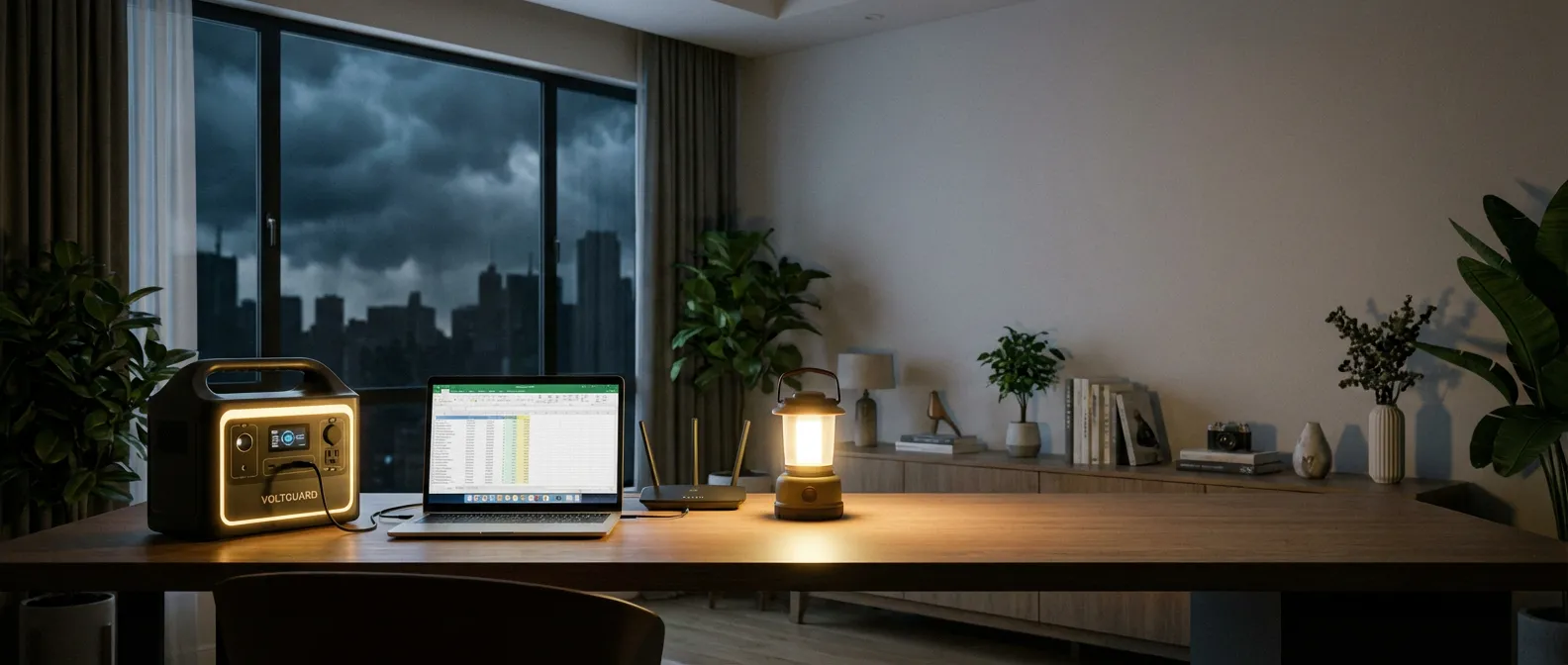
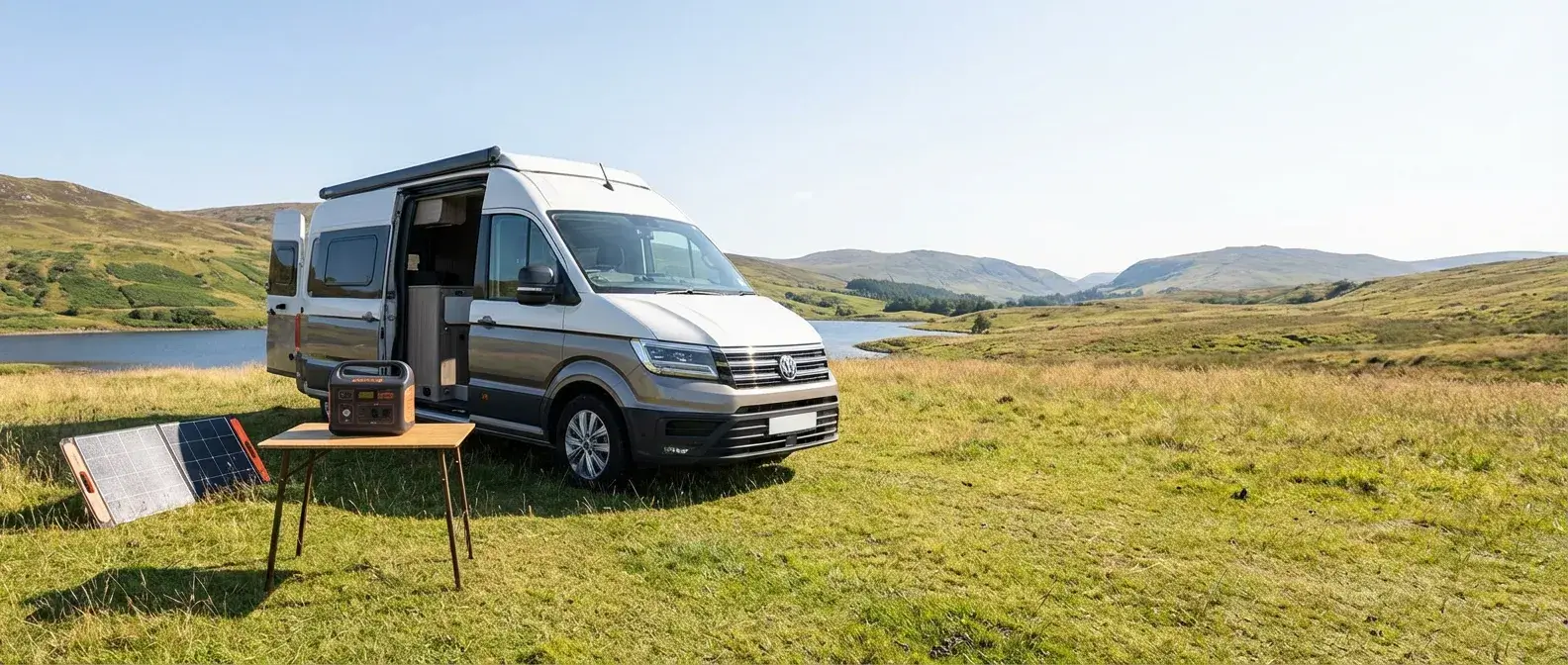
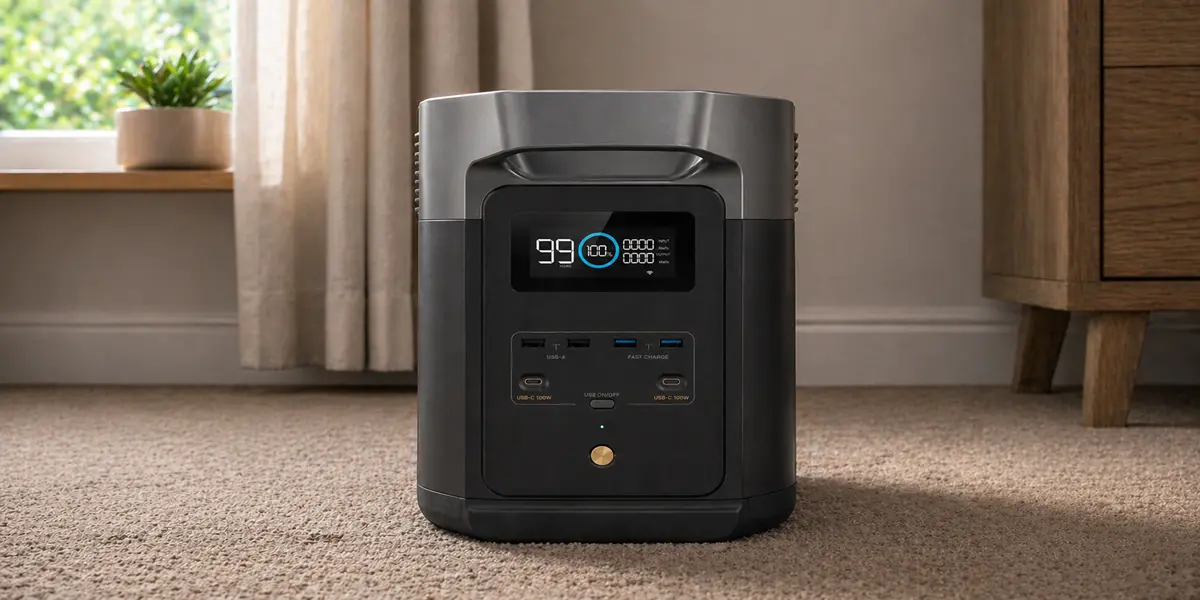
A portable power station is a rechargeable LiFePO4 battery pack with 230V BS 1363 UK sockets, USB ports and solar panel input, built to store electricity and release it on demand. It runs silently and produces no exhaust fumes, so it works indoors as well as outdoors, unlike a petrol generator. That makes it a practical choice for camping, van life, or backup power during a UK power cut.Honest reviews, real UK buyer research, and clear buying guides for camping, home backup, campervans and van life. No sales talk. Use our free Finder Quiz to get a personalised recommendation in minutes.

14+ Products Researched UK Buyer Verified Updated September 2026

Affiliate Disclosure: We may earn a small commission when you buy through links on this site. This never affects our recommendations. Read our full disclosure →

Our Top 3 Portable Power Stations for 2026

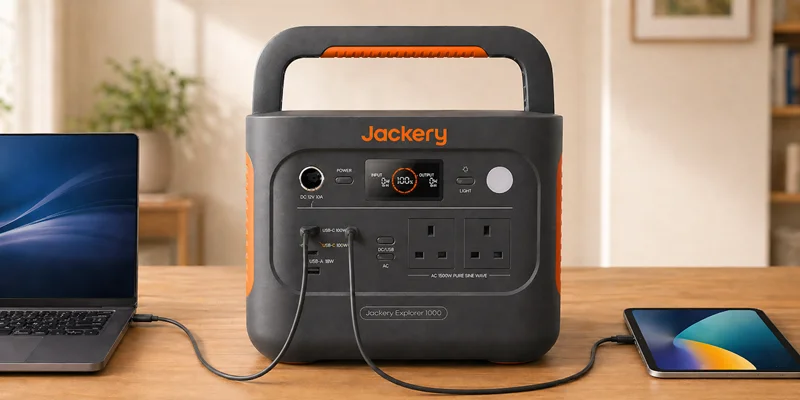
Looking for the best portable power station in the UK right now? These three come out on top after we compared verified owner reviews, UK pricing and warranty support across the whole market. Each one suits a different priority, whether that's all-round value, weight, or camping performance. Based on verified UK owner reviews and detailed research across specs, pricing, and warranty support
Which Portable Power Station Do You Need?

Not every portable power station UK buyers search for suits every job. A festival weekend, a static caravan and a full-time van life setup all call for different capacity and features, and a power cut at home has its own demands too. Use the four guides below to find the right fit, or jump straight to our solar generator picks if solar charging matters most to you.

Not Sure Which Power Station You Need?

If you'd rather skip the reading and get a straight answer, these two free tools do the work for you. Both take a couple of minutes and are built around real UK devices and typical UK usage patterns.

Sizing Calculator

Enter your devices and usage to calculate exactly what capacity you need for your specific situation

Calculate Now

Power Station Finder

Answer 5 quick questions and get a personalised power station recommendation in under 2 minutes

Start Quiz

Browse Portable Power Stations by Brand

We currently cover four brands sold widely in the UK: EcoFlow, Jackery, Bluetti and Anker. All four back their portable power stations with proper UK warranty support, which matters more than any single spec once you're relying on the unit during a power cut or a week off-grid. Pick a brand below to see every model we've reviewed.

Why Trust Our Recommendations?

We don't make fake hands-on testing claims, and we don't pretend to own every model on this site. Here's exactly how we build every review, so you can judge our research the same way you'd judge a product.

Manufacturer Specs

We read every spec sheet directly from EcoFlow, Jackery, Bluetti and Anker, not third-party summaries.

UK Buyer Reviews

Hundreds of verified Amazon UK and Trustpilot reviews analysed to find real patterns, not cherry-picked praise.

Technical Analysis

Professional teardowns and technical reviews give us depth beyond what the spec sheet shows.

UK-Focused

UK pricing in £, UK warranty terms, UK socket compatibility, and real British weather conditions.

Latest Portable Power Station Reviews

These are the most recent portable power station UK reviews we've published, covering everything from budget-friendly camping units to large-capacity systems built for home backup. Every review is based on manufacturer specs, verified UK buyer feedback and technical teardowns, not a single afternoon with the box. We update older reviews whenever pricing, specs or availability changes.
View All Reviews
Premium
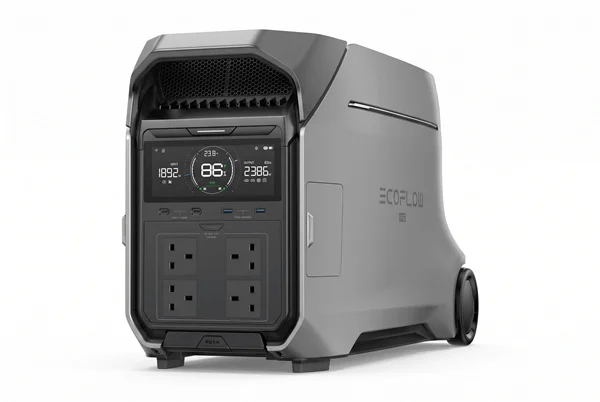
EcoFlow Delta Pro 3 portable power station seen from the front, showing its display and AC sockets. photo shot

EcoFlow Delta Pro 3:

★★★★☆ 8
Capacity4096 Wh
Output4000W
Weight51.5 kg
BatteryLiFePO4
4,096Wh LFP, expands to 12kWh. Fixed home backup power.
Large Capacity
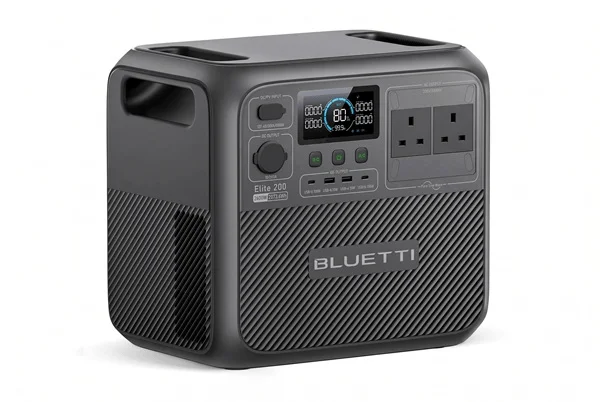
A black Bluetti Elite 200 V2 portable power station with a digital screen and power outlets.

Bluetti Elite 200 V2:

★★★☆☆ 7.8
Capacity2073.6 Wh
Output2600W
Weight24.2 kg
BatteryLiFePO4
Big, heavy and built to stay put in a van or home.
Best High-Power
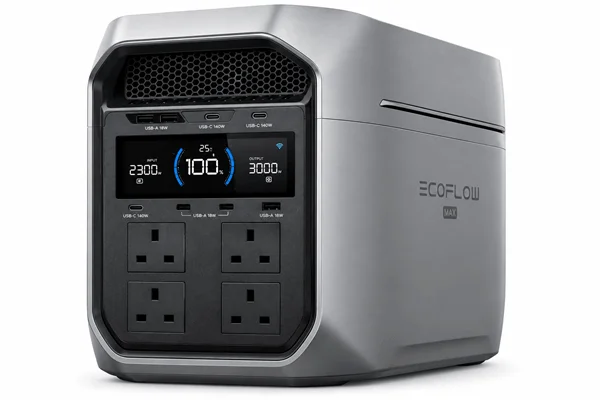
EcoFlow DELTA 3 Max Plus portable power station product shot

EcoFlow Delta 3 Max Plus:

★★★☆☆ 7.5
Capacity2048 Wh
Output3000W
Weight22.1 kg
BatteryLiFePO4 (LFP)
Built for whole-home backup and busy workshops.
Best Lightweight
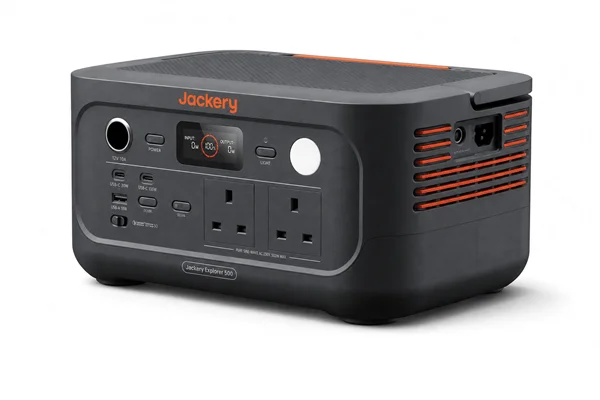
Jackery Explorer 500 v2 portable power station showing front display and output ports

Jackery Explorer 500 v2:

★★★★☆ 8.2
Capacity512 Wh
Output500W
Weight5.7 kg
BatteryLiFePO4
The discontinued Explorer 500, properly replaced.
Best Small UPS
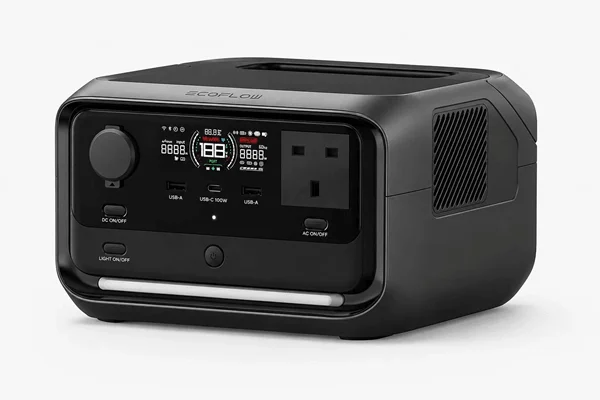
EcoFlow RIVER 3 Plus portable power station product shot showing the front display, AC outlet, USB ports and built-in light

EcoFlow RIVER 3 Plus:

★★★★☆ 8.2
Capacity286 Wh
Output600W
Weight4.7 kg
BatteryLiFePO4
600W from 4.7kg, and it keeps a router alive through a power cut. Suits van life, festivals and a desk that cannot afford to reboot. Just don't plan on a kettle.
Home Backup
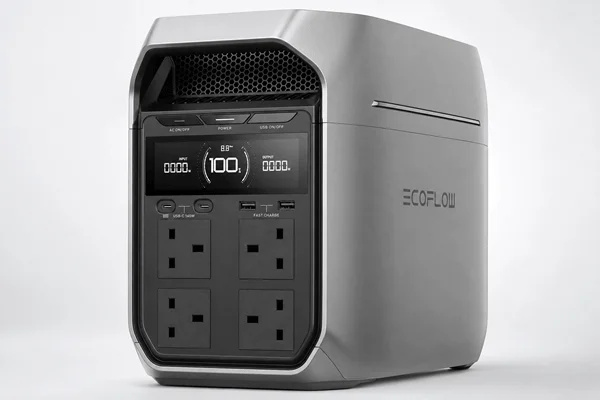
EcoFlow DELTA 3 Plus portable power station product shot showing the front display, four UK AC outlets and USB ports

EcoFlow Delta 3 Plus:

★★★★☆ 8
Capacity1024 Wh
Output1800W
Weight12.5 kg
BatteryLFP
56-min charge, 30dB. Quiet home office backup.

Frequently Asked Questions

Common questions from UK buyers, answered honestly

What is a portable power station?
A portable power station is a rechargeable battery unit with built-in AC outlets, USB ports, and often solar input. Unlike petrol generators, it produces no fumes, runs quietly, and can be recharged from mains electricity, solar panels, or a car outlet. People use them for camping, home backup during power cuts, van life, and outdoor work. Battery capacity is measured in watt-hours (Wh), and the higher the number, the longer it can power your devices.
How do I choose the right portable power station?
Start by matching the unit to how you'll actually use it: camping favours something light and quiet, home backup needs higher capacity and a fast UPS switchover, and van life depends on strong solar input. Beyond that, check the battery uses LiFePO4 chemistry, since it lasts far longer than older lithium-ion types, and confirm the UK warranty terms before you buy. Our best portable power station guide breaks down the top picks by use case, or take the Finder Quiz for a personalised recommendation in under two minutes.
How much does a portable power station cost in the UK?
UK prices typically start under £250 for small units suited to phones and lights. Expect to pay £250 to £500 for mid-range models, and £500 to £1,000 for a quality 1kWh LiFePO4 unit, which is the most popular price bracket among UK buyers. Larger, expandable systems with 2kWh or more of capacity usually start above £1,000.
What can a portable power station run?
A typical 1kWh portable power station can run a small fridge for roughly 6 to 14 hours, fully charge a laptop around 15 times, or keep phones and lights running for several days. It will not run high-draw appliances like a kettle, an electric shower or an oven, since these typically need 2,000W or more, well beyond what most portable units can output. Use our sizing calculator to work out the right capacity for your own devices.
How long does a portable power station take to charge?
Most modern LiFePO4 power stations charge fully from the mains in roughly 1 to 2 hours, and the fastest models can reach 80% in around 45 to 50 minutes. Solar charging is much slower in typical UK conditions, often taking most of a day even with a decent panel and some sunshine. Charging from a car's 12V socket works too, but it's best treated as a slow top-up rather than a main charging method.
Portable power station vs petrol generator: what's the difference?
The core difference is the power source: a portable power station stores electricity in a battery, while a generator burns petrol or diesel to create it on the spot. A power station runs silently, produces no fumes, and is safe to use indoors, whereas a generator can run for as long as you keep it fuelled, but needs outdoor ventilation and regular maintenance. For most UK camping trips and everyday power cuts, the power station is the more practical option. Read our full power station vs generator comparison for a detailed breakdown.
How long do portable power stations last?
Battery longevity depends on the chemistry used. LiFePO4 (Lithium Iron Phosphate) batteries last 2,000 to 4,000+ charge cycles, which usually works out to 8 to 15 years of regular use. Older Li-ion (NMC) batteries last only 500 to 1,000 cycles by comparison. Most products we recommend use LiFePO4, so it's worth checking before you buy, and we flag it clearly in every review where a product still uses older Li-ion technology.
Can you leave a portable power station plugged in all the time?
Yes, if it's a modern LiFePO4 unit being used as UPS backup, since the built-in battery management system stops it overcharging once it's full. For long-term storage rather than daily use, it's healthier to keep it at around 50 to 80% charge and top it up every few months rather than leaving it at 100%. Older lithium-ion models are less forgiving of being left on charge continuously, so it's worth checking your manufacturer's guidance before leaving any unit plugged in permanently.