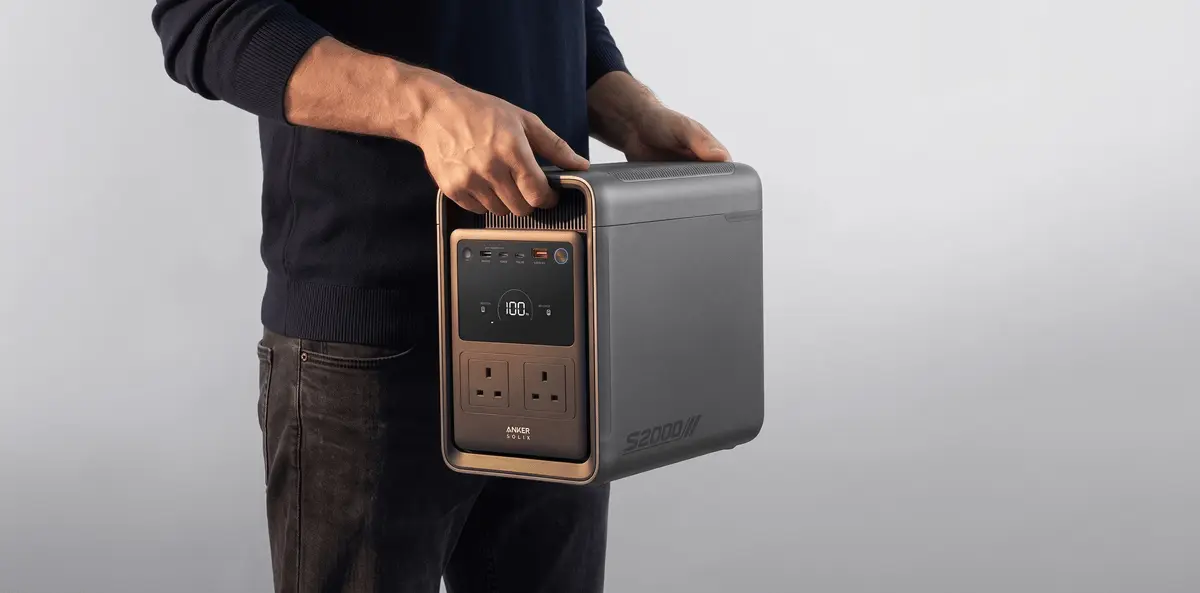
What Is the Anker SOLIX S2000 and Who Is It For?
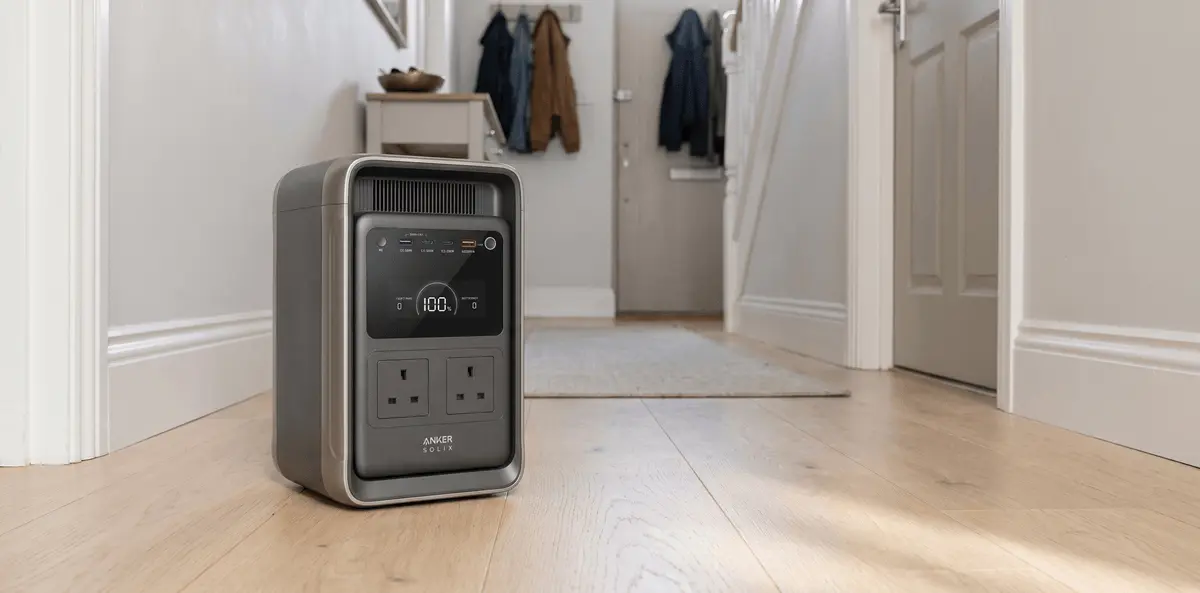
The Anker SOLIX S2000 (model AS220) is a 2,010Wh LiFePO4 power station that went on pre-order in Europe in September 2026. This review covers the 230V UK version, with four three-pin sockets and 1,500W of output. It suits fridges, routers and home offices in a power cut, but not kettles.
The S2000 is built around weight. At 16.2kg, per Anker UK’s spec table, it’s the lightest of the six 2kWh-class units we compared on manufacturer specs. The closest rival, the Jackery Explorer 2000 v2, is about 1.3kg heavier.
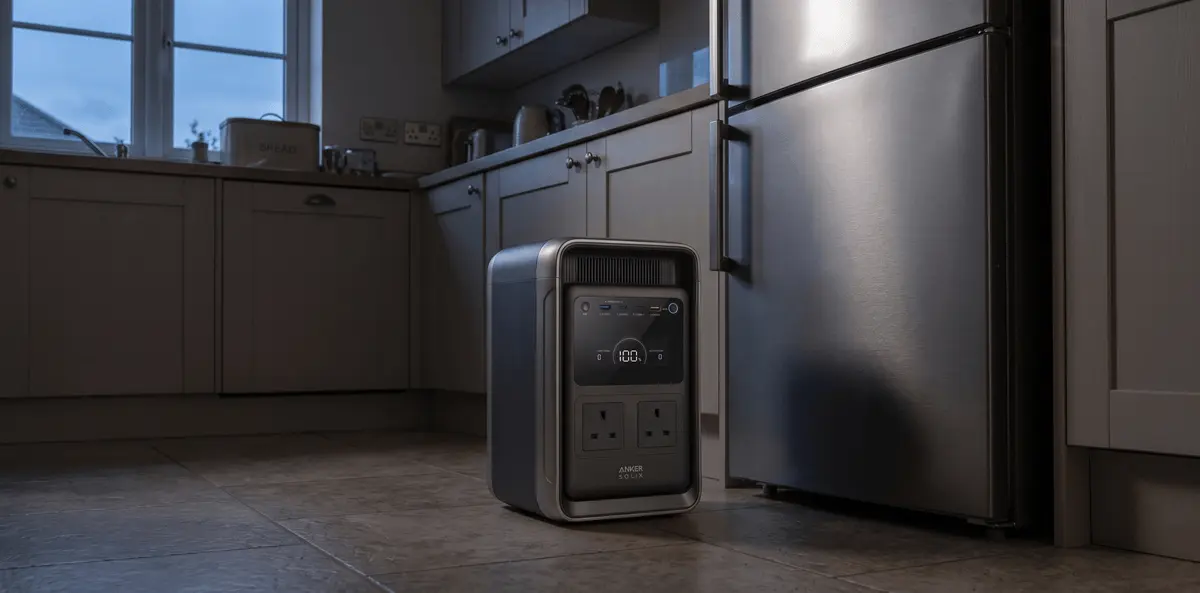
Home backup is the main job. Anker UK pitches it as a 24-hour family backup, and Android Authority gave it an Editor’s Choice award. It’s a plug-in unit, not a whole-home system, so you choose which appliances to connect. Our best power stations for home backup page shows how it compares.
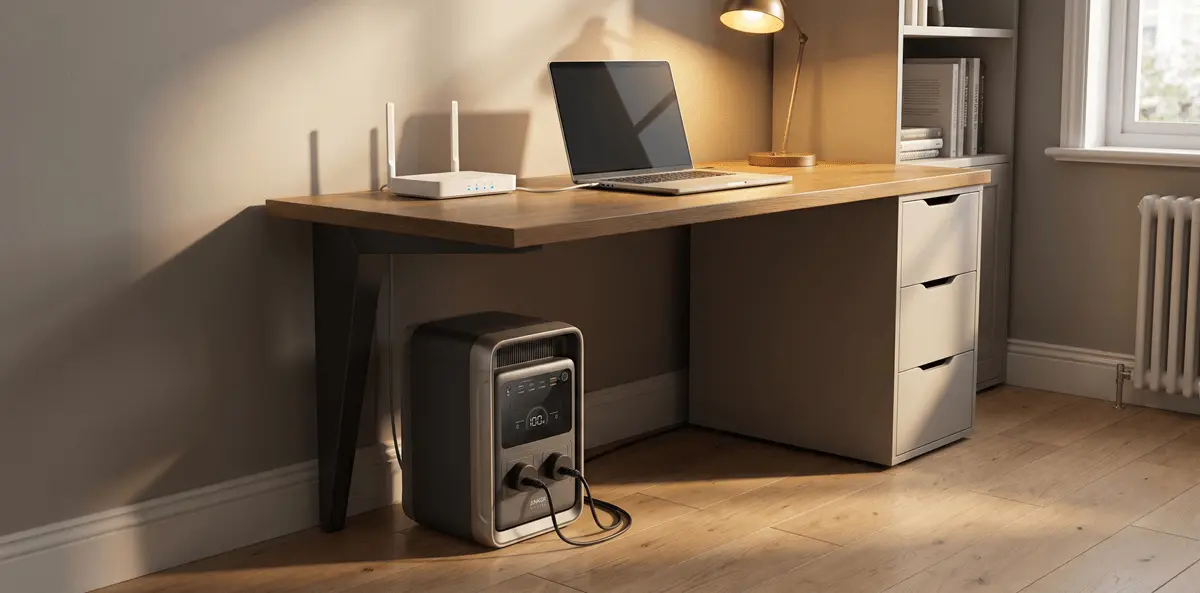
A home office is the second job. Anker sells it as a UPS that switches to battery in 10 ms or less. Techtest.org found it kept a NAS running through its UPS test.
The S2000 isn’t a camping unit. Reviewers keep mentioning the single handle, and there’s no 12V socket and no light, so we haven’t placed it on our camping or campervan lists.
One warning for UK buyers. Most English reviews test the US model, with five 120V sockets and 1,600W fast charging, as ESS News describes. This page uses the UK figures and says where Anker’s own pages disagree.
Key Specifications at a Glance
| Spec | UK figure | Source or note |
|---|---|---|
| Capacity | 2,010Wh | Anker's UK spec table rounds this to 2,000Wh |
| Battery | LiFePO4, 314Ah cells | Anker UK |
| AC output | 1,500W rated | Up to 3,000W peak (Anker) |
| Bypass output | 2,300W | Mains pass-through (Anker UK) |
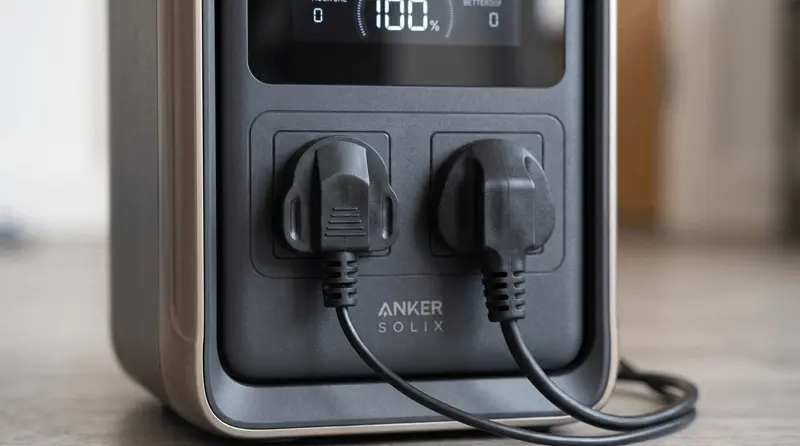
| AC sockets | Four UK three-pin | Two front, two rear (Anker UK port diagram) |
| USB ports | 2 USB-C (100W and 15W), 1 USB-A (12W) | The 15W USB-C and the USB-A share an 18W limit (Anker UK) |
| 12V car socket and light | None | Notebookcheck and Techtest.org |
| AC charging | 1,150W default, 1,500W UltraFast | UltraFast is switched on in the app (Anker UK) |
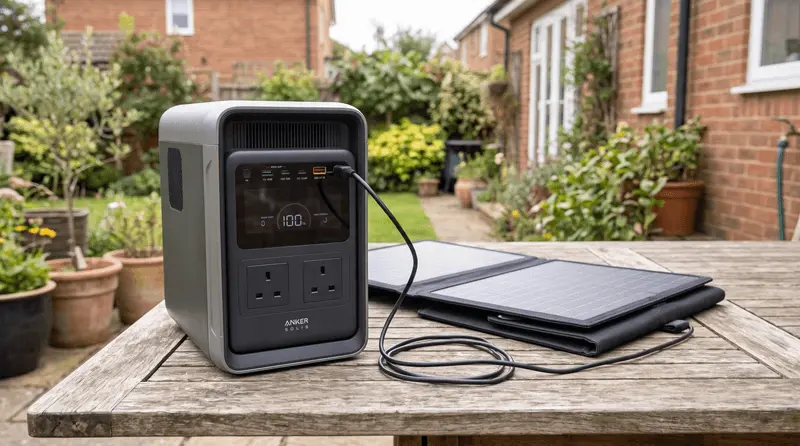
| Solar input | 400W max, 11 to 60V | One XT60i port (Anker UK) |
| UPS switchover | 10 ms or less | Anker UK spec table |
| Idle draw | 10W (Anker spec table) | Anker's footnote says 6W. Techtest.org measured 2.5 to 2.8W |
| Weight | 16.2kg | Anker UK |
| Size | 208 x 282 x 323.3mm | Anker UK spec table |
| Cycle life | Up to 10,000 cycles, keeping over 60% | Anker UK footnote |
| Expansion | None | Notebookcheck |
| Warranty | 5 years | From Anker or an authorised UK retailer |
| App | Bluetooth and Wi-Fi | Anker support article |
Anker’s own UK pages disagree in three places. The spec table rounds capacity to 2,000Wh, while the product page and Anker’s support article say 2,010Wh. We use 2,010Wh, which matches the 2,009.6Wh that ESS News lists for the US unit.
Idle draw is 10W in the spec table but 6W in a product page footnote. Efficiency is 88% on one page and 86% on another, both from Anker’s internal tests. Measured round-trip efficiency on the EU unit was 77.3% at Techtest.org and about 78% at Notebookcheck.
We leave out US-only numbers. The US model has five 120V sockets, 1,600W UltraFast charging and 1,800W bypass, according to ESS News and Android Authority.
Anker SOLIX S2000 vs C2000 Gen 2: Which One Are You Actually Buying?
The names are close, so check the label before you click. The C2000 Gen 2 is Anker’s higher-output sibling. The table uses Anker UK’s spec pages for both. If you want a smaller Anker, our Anker SOLIX C1000 Gen 2 review covers that model, and our Anker brand page lists the rest.
| Spec | Anker SOLIX S2000 | Anker SOLIX C2000 Gen 2 |
|---|---|---|
| Capacity | 2,010Wh | 2,048Wh |
| AC output | 1,500W | 2,400W max |
| Weight | 16.2kg | 18.9kg |
| Solar input | 400W max | 800W max on the XT60i input (Anker UK doesn't give a separate solar figure) |
| Expansion | None | Up to 4kWh |
| Cycle life | Up to 10,000, keeping over 60% | 4,000 to 80% capacity |
| UPS switchover | 10 ms or less | 10 ms |
Pick the S2000 for the lower weight, 2.7kg less by our sum. Pick the C2000 Gen 2 for 2,400W of output and the option to expand. The cycle figures stop at different points, 60% and 80%, so don’t compare them directly. Section 10 explains why.
How Fast Does the Anker SOLIX S2000 Charge?
On the mains, the S2000 charges at 1,150W by default and up to 1,500W with UltraFast Mode switched on in the Anker app. Techtest.org measured a full default charge in about 2 hours 15 minutes. No test we found has timed UltraFast on a 230V unit.
Anker says a full default charge takes about 2.3 hours on its product page and 2.23 hours on its spec page. Techtest.org’s result agrees, and Notebookcheck saw default charging peak at 1,100W.
US reviewers tested UltraFast at 1,600W. ESS News reached 80% in about 1.2 hours. Some European sources also quote 1,600W, but Anker UK’s spec table says 1,500W, so we use that and expect a slightly slower result.
The fans pay for the speed. Android Authority (US unit) found them uncomfortably loud in UltraFast, and Techtest.org noted a louder fan too. Anker’s product page FAQ suggests Silent Mode and a charging power of 600W or below to cut fan noise.
Charging from the mains and solar together is quicker still. Notebookcheck’s launch report quotes about one hour to 80% with 400W of solar plus 1,400W from the mains. Treat that as a launch claim.
How Much Solar Can It Take in the UK?
The S2000 takes up to 400W of solar through one XT60i port, at 11 to 60V. Anker says 20% to 80% takes about 3 to 4 hours with a 400W panel in direct sunlight. That’s a best case, and UK cloud will stretch it. The 400W cap is the joint-lowest among the comparison units that publish a solar figure.
Four of the reviews we read raise the 400W cap, including ESS News. The Bluetti Elite 200 V2 takes 1,000W, according to Bluetti’s Irish page, so it fills faster when the sun is out.
Match your panels to the input range. Techtest.org found that a 12 to 14V solar source gave only about 100W. That fits Anker’s spec, which limits the input to 8.2A between 11 and 28V. Panels wired to sit between 28 and 60V use the 12.5A band and can reach the 400W cap.
A fridge doesn’t need 400W, but it only draws on solar while the sun is out. The battery covers the rest. Our UK solar charging guide covers panel sizing for British light.
What Can the Anker SOLIX S2000 Actually Power?
On one charge, the S2000 should run a 12W Wi-Fi router for about 142 hours and a 60W laptop for about 28 hours. A 100W TV setup lasts about 17 hours. Those are our estimates, using 85% of the 2,010Wh. It can’t run a kettle or anything above 1,500W.
Our sum is 2,010Wh x 0.85, which gives 1,708Wh, divided by the appliance’s watts. These are estimates, not measurements, and your own appliances will differ.
The 85% allowance is cautious. Notebookcheck measured just over 1,900Wh usable at about 250W, and Techtest.org averaged 1,893Wh, both on the EU unit.
Fridge runtimes depend on the fridge, so we give sourced figures in the FAQ below, not a card.
What Can It Not Run?
Anything above 1,500W won’t run. That covers UK kettles, most heaters and heavy tools. Anker lists up to 3,000W peak, which helps with start-up surges, not with continuous heat.
US testers show where the limit bites. Gizmodo reported that an 1,800W load cut the output four to five times, and a window air conditioner’s compressor appeared not to start. GearJunkie‘s planer tripped at about 1,800W. Notebookcheck says a hair dryer may not run at its highest setting.
Can the Anker SOLIX S2000 Back Up a UK Home?
The S2000 can back up the essentials, but not the whole house. It switches to battery in 10 ms or less, so a router, fridge or home office stays on through a power cut. With 1,500W of output and no expansion battery, you plug in what matters and leave the rest.
Anker’s spec table lists the UPS switchover as 10 ms or less. In Techtest.org’s test the UPS kept a NAS running, and ESS News and Notebookcheck also praise its UPS behaviour. Anker doesn’t say which desktop PCs tolerate the gap, so check your own kit.
In bypass mode, mains power passes straight through at up to 2,300W, per the same spec page. That’s mains pass-through, not battery output. When the power cuts, the 1,500W limit applies. The US bypass limit is lower, at 1,800W, so US reviews understate the UK figure.
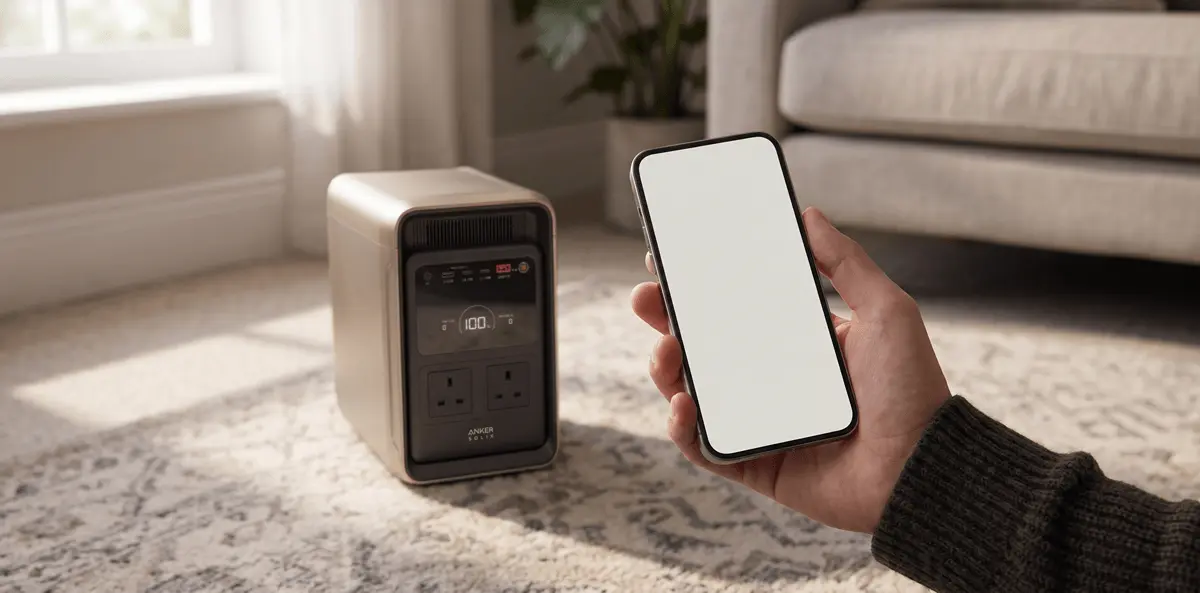
The app adds some control. The Amazon UK listing names Time-of-Use Mode and Storm Guard, and Anker’s US support article describes the app modes. We haven’t seen UK firmware screens, so check the modes after you set it up.
Idle draw matters in a long power cut. Anker’s pages give 10W and 6W, so use the measured figures. Techtest.org measured 2.5 to 2.8W with the outlets on. Notebookcheck saw just over 10% of the battery drain in 24 hours with AC on.
What Ports Does the Anker SOLIX S2000 Have?
The S2000 has seven outlets: four UK three-pin AC sockets (two on the front, two on the back), two USB-C ports and one USB-A port. The USB-C ports give 100W and 15W, and the USB-A gives 12W. There’s no 12V car socket and no built-in light.
- Four UK three-pin sockets Two sit on the front and two on the back, as Anker UK's port diagram shows. All four share the 1,500W output limit.
- Two USB-C ports One gives up to 100W, enough for most USB-C laptop chargers. The other gives 15W and shares an 18W limit with the USB-A port.
- One USB-A port It gives 12W at 5V and 2.4A. Reviewers, including Notebookcheck and Techtest.org, list the small port count as a drawback.
- AC input and one XT60i port The AC input is on the back. The XT60i port takes solar, car or alternator input, up to 400W for solar.
- No 12V car socket, no light Notebookcheck and Techtest.org found no car socket or other DC output, and Notebookcheck lists no light.
Check the sockets in photos before you trust them. The main image on Amazon UK shows US-style sockets, which the UK model doesn’t have. The count above comes from the port diagram on Anker UK’s spec page.
How Quiet Is the Anker SOLIX S2000?
Anker UK’s pages give no decibel figure. The Amazon UK listing claims 30dB, with no condition attached, so treat it as a maker claim. Notebookcheck measured around 35dB on standard charging, with no distance given.
The UltraFast bar is a guide, not a measurement. Android Authority (US unit) called the fans uncomfortably loud in UltraFast, and Techtest.org noted a louder fan. Gizmodo heard the fan under heavy load. For a bedroom or home office, use Silent Mode.
Battery Life: How Long Will It Last?
Anker rates the S2000 for up to 10,000 cycles while keeping over 60% of its capacity, per its spec page and UK blog. Anker estimates up to 15 years at one to two cycles a day. That’s an estimate, and the warranty runs for 5 years.
Don’t set that number against rivals’ figures. The Jackery Explorer 2000 v2 lists 4,000 cycles with no end point. The C2000 Gen 2 lists 4,000 to 80%, and the Bluetti Elite 200 V2 lists 6,000+ to 80%. A battery that can fall to 60% will count more cycles than one that must stay above 80%, so the numbers measure different things.
Notebookcheck lists 6,000 cycles to 80% for the S2000, a figure Anker UK doesn’t state. We treat it as a third-party number.
The 5-year term covers purchases from AnkerDirect and authorised resellers, according to Anker’s warranty policy. The policy doesn’t list the S2000 by name, and cover is limited to the country of purchase. Anker’s where-to-buy guide says an official brand storefront gets the full term, while the warranty from an unverified marketplace seller is often void. Check the seller first.
Anker SOLIX S2000 vs Jackery Explorer 2000 v2 vs Bluetti Elite 200 V2
Figures come from the UK pages of Anker and Jackery, and from Bluetti UK plus its Irish page. The Bluetti UK page doesn’t list weight or UPS time, so those two come from the Irish page. Its socket count comes from its Amazon UK listing title.
On paper the S2000 is the lightest of the three, quotes the fastest UPS switchover and has the most UK sockets. The Bluetti leads on capacity, output and solar. We leave cycle life unmarked, because the three ratings use different end points. Read our Bluetti Elite 200 V2 review for the full picture.
Who This Is NOT For
Anyone who needs to boil a kettle or run a heater. Loads above 1,500W won’t run, and Gizmodo’s US test struggled at 1,800W.
Anyone who wants to add capacity later. The battery can’t be expanded, whereas the EcoFlow Delta 3 Plus is listed to grow up to 5kWh by EcoFlow UK.
Anyone who wants fast solar charging. The 400W cap is joint-lowest among the comparison units that publish a solar figure, and the Bluetti Elite 200 V2 takes 1,000W.
Campers and van-lifers. There’s no 12V socket and no light, and reviewers dislike the single handle at 16.2kg.
Anyone with many USB devices. Three USB ports is a common complaint among reviewers.
Pros and Cons
- 16.2kg, lighter than all five rivals we compared on specs
- UPS switchover in 10 ms or less, and a NAS stayed up in Techtest.org's test
- Four UK three-pin sockets, split evenly between the front and rear
- Low idle draw, with 2.5 to 2.8W measured by Techtest.org with outlets on
- 5-year Anker warranty when bought from Anker or an authorised UK retailer
- Output stops at 1,500W, so kettles and heaters are out
- Solar input is capped at 400W
- No expansion battery, no 12V socket and no light
- Fans get loud in UltraFast mode, say US and EU testers
- Only three USB ports, and one is 15W
Alternatives Worth Considering
- EcoFlow Delta 3 Plus: smaller, but it grows Choose it if you want to start small and add batteries later. It also lists two 500W solar inputs. The catch is that the base unit holds about half the energy of the S2000.
- Bluetti Elite 200 V2: more output and more solar Choose it if you need 2,600W and up to 1,000W of solar. It holds 2,073.6Wh. The catch is 24.2kg on the Irish page, which is 8kg more than the S2000.
- EcoFlow Delta 3 Max Plus: much more output, and it expands Choose it for 3,000W, four sockets and expansion up to 10kWh, per one UK retailer's listing. The catch is about 22.1kg, which is 5.9kg more than the S2000.
Final Verdict: Is the Anker SOLIX S2000 Worth It in the UK?
Buy the Anker SOLIX S2000 if you want a light power station to keep a fridge, router and home office running through a power cut. It weighs 16.2kg, has four UK sockets and cuts over to battery in 10 ms or less. Our home backup shortlist puts it next to the alternatives.
Skip it if you need kettles, heaters, fast solar charging or room to expand. Its 7.6 Overall sits between the Bluetti Elite 200 V2 (7.8) and the EcoFlow Delta 3 Max Plus (7.5) on our scale. Solar input is its weakest score at 5.0, and value is its strongest at 9.0.
We haven’t tested it, so these judgements rest on Anker’s specs and the tests we credit above. See how it ranks overall on our best portable power stations page, and check the live price on Amazon before you decide.
Frequently Asked Questions
Yes, if you want light backup for the essentials. It scores 7.6 out of 10 overall, with 9.0 for value and 8.0 for portability. Its weakest score is 5.0 for solar input, and its 1,500W output rules out kettles and heaters. Skip it if you need either in a power cut.
Anker says up to 24 hours with a 700L fridge at 25°C, in its own lab test (Anker UK). US tests ran a fridge for longer: Gizmodo got 42 hours down to 5% charge, and GearJunkie got 34 hours 15 minutes. Fridges differ, so treat these as a rough range.
No, the S2000’s battery can’t be expanded. Notebookcheck lists expandable as no, and Anker UK doesn’t describe an expansion battery. Capacity stays at 2,010Wh, so plan your loads around it. If you may want more later, choose a model built to grow.
Yes, you can. The S2000 passes mains power to your devices while it charges, which Anker calls bypass mode. Notebookcheck measured about 3W of overhead in bypass. Fan noise rises if you charge in UltraFast with heavy loads running, so use Silent Mode when noise matters.
Yes. Anker sells it as a UPS, and a UPS stays on the mains until a power cut. Its spec table lists 2W of standby power, and Techtest.org measured about 2.5 to 3W of overhead in UPS mode. Expect a small, steady draw from the wall.
Yes, the S2000 has a Time-of-Use mode, and the Amazon UK listing names it. Anker’s US support article also lists scheduled AC output and a Fast Charging Plan, set up in the app over Wi-Fi or Bluetooth. Anker UK publishes no tariff steps, so match the app’s settings to your supplier’s off-peak hours.
Neither is better outright. The S2000 holds 2,010Wh against 1,024Wh, but the Delta 3 Plus outputs 1,800W against 1,500W, weighs up to 12.5kg against 16.2kg and expands to 5kWh. Pick the S2000 for energy, the Delta 3 Plus for output and growth.