Finding the best portable power station for home backup means no electrician, no rewiring and no waiting on a callout. It keeps your fridge running when the mains fails, and when a fitted solar battery goes dead too. Check our size guide to work out how much capacity you need, or see how it compares with a generator. We work from manufacturer specs, UK owner reviews and named independent reviews, and we run no lab tests of our own.
Our top pick is the EcoFlow Delta 3 Plus, with 1,024Wh and a UPS switchover under 10ms. The Bluetti Elite 200 V2 at 2,073.6Wh is the step up for longer cuts. For the longest cuts, the EcoFlow Delta Pro 3 holds 4,096Wh. The EcoFlow RIVER 3 Plus covers small loads like a router or CPAP.
In Brief
Pick the EcoFlow Delta 3 Plus for short power cuts and a home office. Pick the Bluetti Elite 200 V2 for a full day or more, or the EcoFlow Delta Pro 3 for longer cuts and heavy loads. The EcoFlow RIVER 3 Plus is enough if you only need a router or CPAP running. Whole-house cover needs a fitted battery or a standby generator instead.
EcoFlow Delta 3 Plus
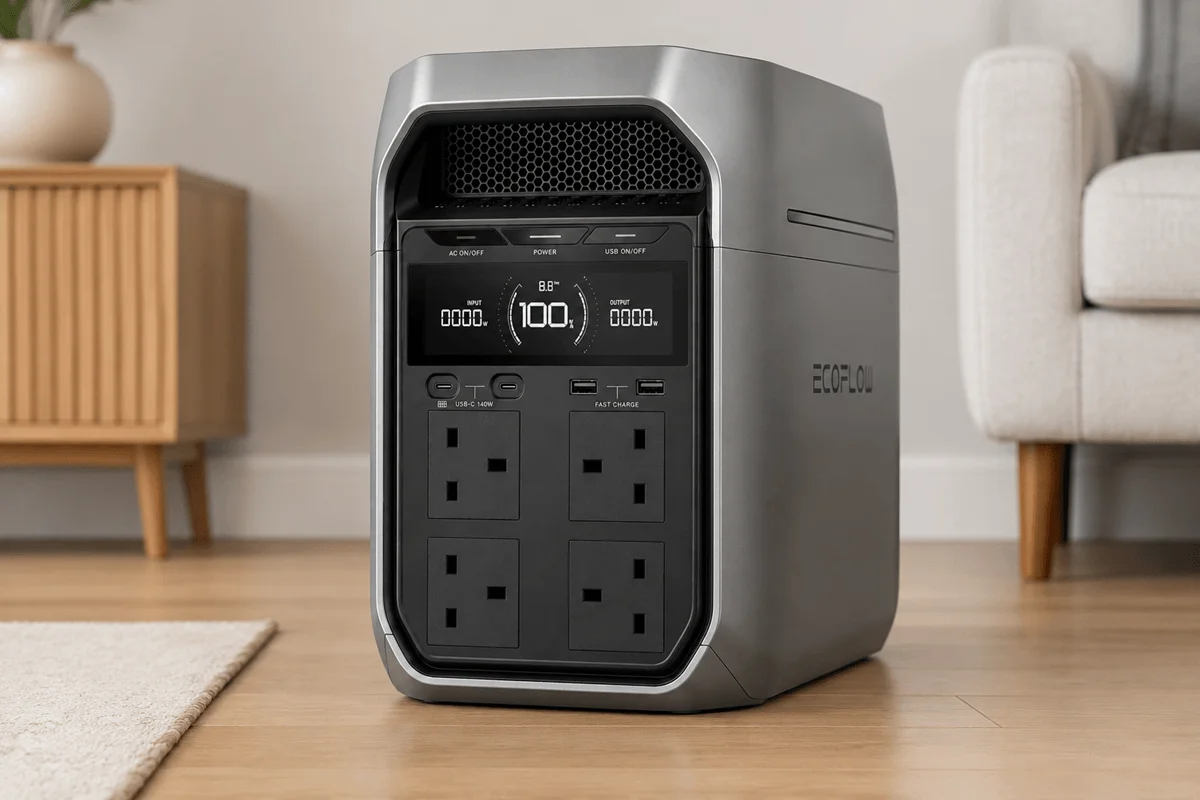
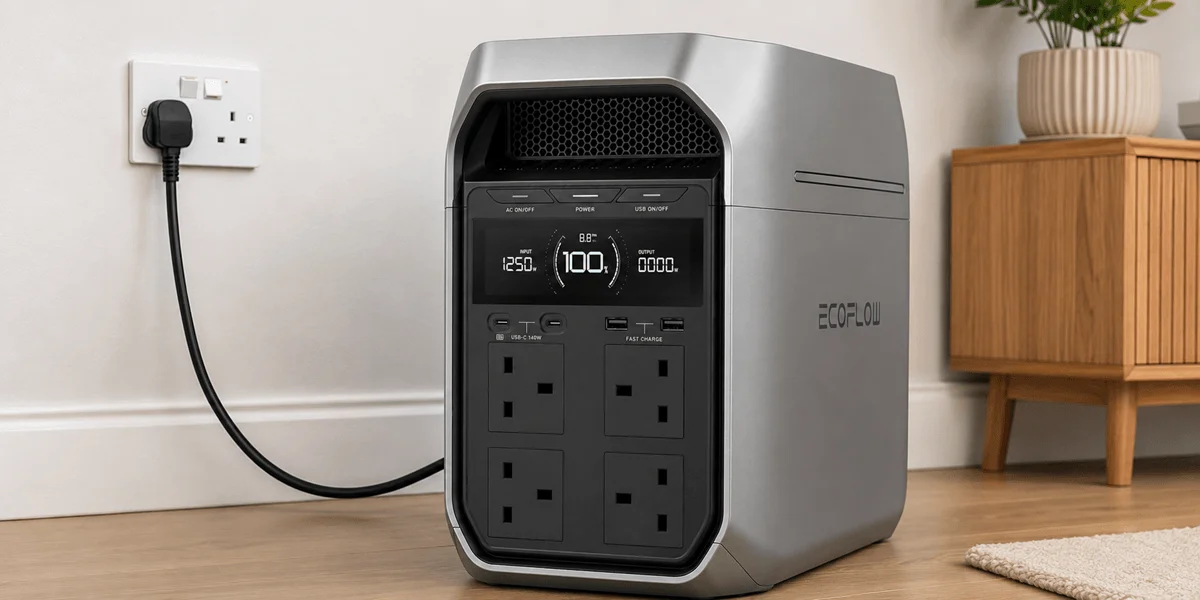
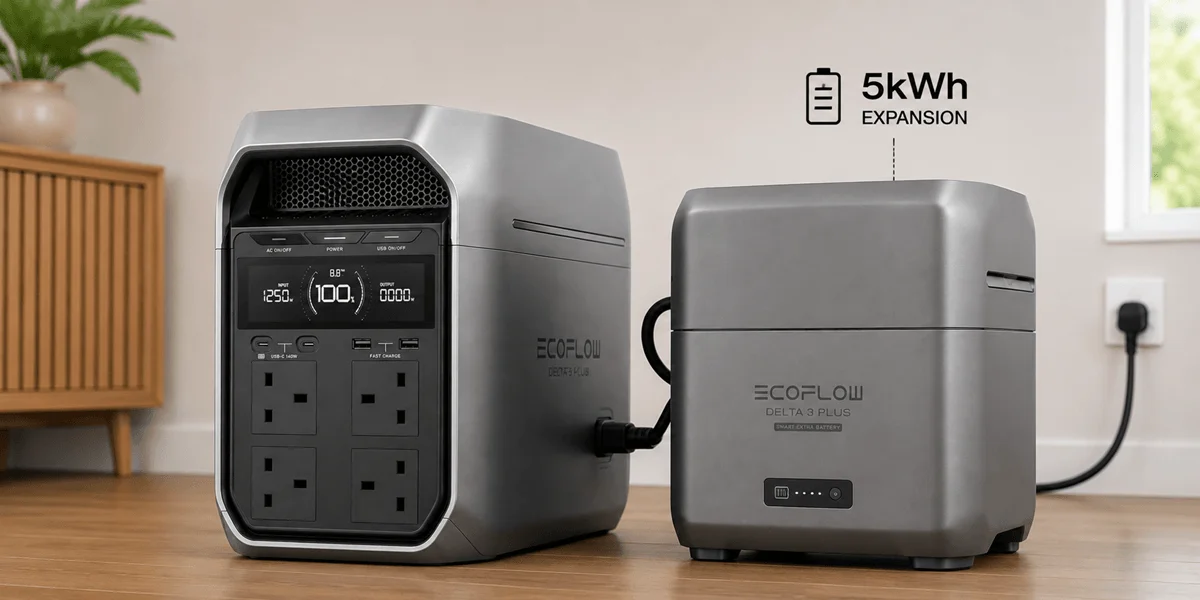
It’s our pick for serious home backup. The UPS switchover is under 10ms, so your router and fridge keep running through a cut. NAS and HID support lets a connected server shut down safely, and you can expand to 5kWh for longer, multi-day power cuts. The trade-off is that its fans can run even at low loads. See the full review for full specs and details.
What Makes a Good Home Backup Power Station?
Home backup needs differ from camping. You’re not carrying the unit anywhere, so weight matters far less. What counts is capacity, UPS reliability, AC output and the option to expand. Most UK power cuts are short. Storms can cause longer ones, lasting hours or even days, especially in rural areas. That’s why capacity and a fast UPS switchover matter most. Unlike a petrol generator , a power station makes no fumes and is safe to run indoors.
Capacity (Wh)
The larger the capacity, the longer you can run essentials. Aim for around 1,000Wh for a short cut and 2,000Wh or more for a full day.
UPS Switchover
Look for under 20ms so your router, computer and fridge keep running without noticing the cut.
AC Output (W)
1,800W or more, plus a boost mode, lets you run a kettle in short bursts.
Expandability
An expandable unit lets you add batteries for multi-day power cuts without buying a second power station.
Who this isn’t for
These power stations are built for essentials, not your whole house. Hoping to run an electric shower, a wired-in cooker or central heating through a cut? None of the models here can do that from its own sockets. You’d need a proper generator or a wired-in battery system instead. If you only need power for the occasional weekend campsite, a smaller, lighter unit will suit you better and cost less. And if you’re on a tight budget, it’s worth checking our budget picks before committing to a home-backup-sized unit.
Why Doesn't A Fitted Solar Battery Work In A Power Cut?
A fitted solar battery goes dead in a power cut because UK grid regulations require it to disconnect the instant the grid fails. This protects engineers working on the line. Unless it has a backup port or gateway fitted, your battery simply switches off with the rest of the house. A plug-in power station was never grid-tied, so it keeps running.
This is called anti-islanding, and it’s a safety rule, not a design flaw. Any inverter feeding electricity into the grid must disconnect within moments of losing mains power. That’s the rule under the G98 grid connection standard set by the Energy Networks Association.
The aim is to protect anyone who might be working on what they assume is a dead line. The rule makes sense, but it means a standard solar and battery setup is no use in a power cut. You’d need to pay extra for a backup port or a whole-home gateway.
We cover the difference between generators and battery backup in our power station vs generator guide. A portable power station sidesteps the problem entirely. It was never connected to your consumer unit or exporting to the grid, so plug it in, switch it on, and it works.
Can a Power Station Back Up a Whole House? The Three Levels of Home Backup in the UK
A portable power station can’t back up a whole house. It covers essentials such as a fridge, router, lights and phones. Whole-house cover needs a fitted battery with a gateway, or a standby generator. There are three levels of home backup in the UK, and this page covers the first.
Level 1: plug-in power station. No electrician, no earth rod, no work on your consumer unit. Plug your fridge, router, lamps, phones or a CPAP straight in. A plug-in power station is the cheapest option by a wide margin, and it works the moment you switch it on. Browse the full range of portable power stations if you want more than this page’s picks.
Level 2: fitted battery with a backup port (EPS). Powers a small number of pre-selected circuits chosen at the design stage. Needs a qualified installer, an earth rod, and a second fuse board next to your main one. Expect to add roughly £600 to £1,000 on top of a battery install, depending on cable runs and circuit count.
Level 3: whole-home gateway, the full uninterruptible setup. Your consumer unit switches over automatically within seconds of the grid failing. It needs a qualified installer, an earth rod, and typically a larger battery to leave headroom for the reserve. It’s the most expensive route, and a different purchase entirely from anything on this page.
None of this makes level 1 the lesser option. It does a different job: covering your essentials, instantly, without touching your wiring.
One pick here can go a step further. EcoFlow’s manual says the Delta Pro 3 can connect to a building through an isolation switch. A certified electrician has to fit it.
Do You Need a Generator for UK Power Cuts, or Will a Power Station Do?
For most UK homes, a power station is enough. It runs a fridge, router, lights and phones through a typical cut, with no fumes and no installation. You’d only need a generator for heating or whole-house cover lasting days, and that usually means a fitted standby unit.
| A power station is enough if | A generator is the better buy if |
|---|---|
| You want a fridge, router, lights and phones kept running | You want to run a whole house, heating included |
| Most of your power cuts last under an hour | You face cuts lasting days and can refuel to keep going |
| You want to run it indoors with no fumes | You can site it outdoors, with an electrician wiring it in |
| You want no electrician and no work on the consumer unit | You’re happy to have a changeover switch fitted |
What people call an indoor generator is really a battery power station. It makes no fumes, so it’s safe to run indoors. Petrol and diesel generators produce carbon monoxide and must run outdoors, and NHS guidance on carbon monoxide lists portable generators among the sources.
A standby generator is a fixed unit wired in by an electrician, with a changeover switch. It can run a whole house, heating included, for as long as it has fuel. Our power station vs generator guide compares the two in more detail.
Power Bank, Power Station or Home Battery Backup: Which Do You Need?
A power bank charges USB devices like phones. A portable power station runs mains appliances like a fridge or router through three-pin sockets. A fitted home battery can cover chosen circuits or the whole house, but it needs an installer. For most people covering a power cut, the plug-in power station fits best.
| Type | What it runs | What it needs |
|---|---|---|
| Phone power bank | USB devices only, such as phones. It holds tens of watt-hours and has no three-pin socket. | Only a USB charger to recharge it. |
| Portable power station | A fridge, router, lights, phones and a CPAP, through UK three-pin sockets. | A mains or solar recharge. No electrician and no wiring work. |
| Fitted home battery | Chosen circuits or the whole house, depending on the setup. | A qualified installer, plus a backup port (EPS) or whole-home gateway to work in a power cut. |
If you only want to keep your essentials going, a plug-in power station does the job without an installer.
Full Comparison Table
| Model | Capacity | Solar Input | MPPT | Cycles | Warranty |
|---|---|---|---|---|---|
| EcoFlow Delta 3 Plus: | 1024 Wh | 1000 W | Dual | 4000 | 5 years UK |
| EcoFlow RIVER 3 Plus: | 286 Wh | 220 W | - | 3,000+ | 5 years UK |
| EcoFlow Delta Pro 3: | 4096 Wh | 2600 W | Dual | 4,000 to 80% | 5 years |
How We Researched These Picks
We don’t run our own lab tests on these units, and we’re not going to pretend we do. What’s here comes from published manufacturer specifications, cross-checked against UK owner reviews on Amazon and Trustpilot, plus independent reviews and teardowns. Where a figure couldn’t be confirmed, we’ve said so rather than guessed.
Written and researched by Valerie Wei, Editorial Contributor.
EcoFlow Delta 3 Plus: 1,024Wh that grows to 5kWh, with sub-10ms UPS
| Capacity | 1024Wh |
| AC Output | 1800W |
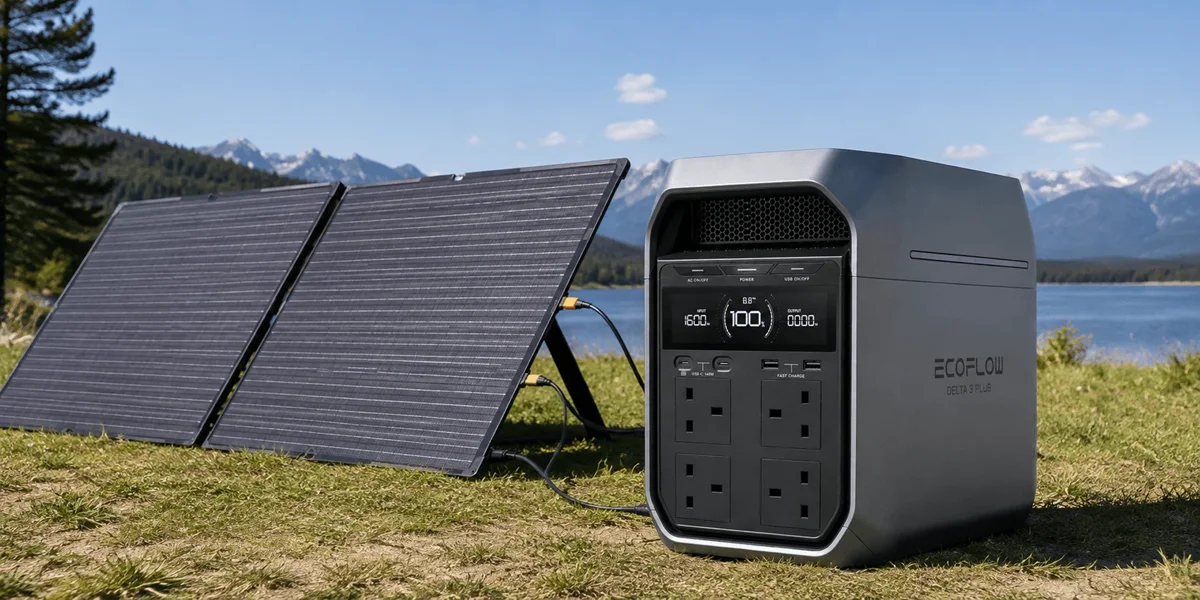
| Solar Input | 1000 max |
| MPPT Ports | Dual |
| Battery | LFP |
| UK Warranty | 5 years UK |
- UPS switchover under 10ms keeps a NAS or PC running through a cut
- Expandable to 5kWh for greater backup capacity
- 4 UK sockets let you run several appliances from one unit
- 800W alternator charging also suits campervan installs
- Fans can run even at low loads, according to T3 and Trusted Reviews
- Heavier than the RIVER 3 Plus at 12.5kg for moving indoors
- Reaching the full 5kWh needs extra batteries bought separately
The Delta 3 Plus is our top home backup pick for anyone with a PC, NAS or home office to protect. Its under-10ms switchover supports NAS and HID signalling, so a PC or server shuts down safely in a power cut. It’s expandable to 5kWh, and it also offers 800W alternator charging for vans and dual solar inputs for camping. Its fans can run even at low loads, though, and the smaller RIVER 3 Plus covers just a router and laptop.
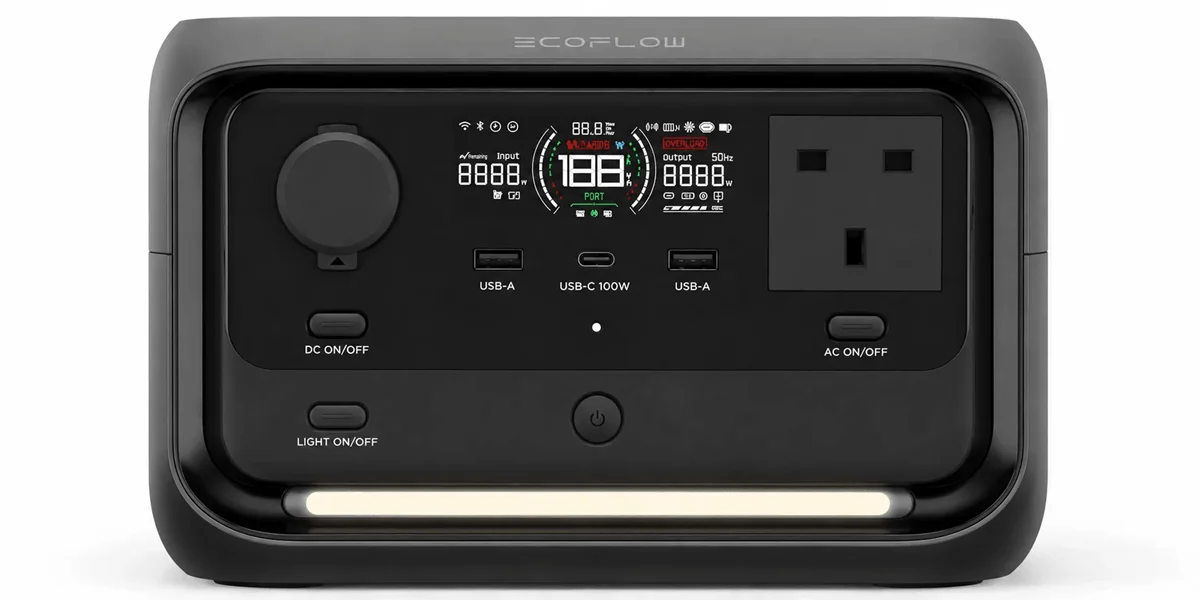
EcoFlow RIVER 3 Plus: sub-10ms UPS switchover, 286Wh at 4.7kg
| Capacity | 286Wh |
| AC Output | 600W |
| Solar Input | 220 max |
| MPPT Ports | |
| Battery | LiFePO4 |
| UK Warranty | 5 years UK |
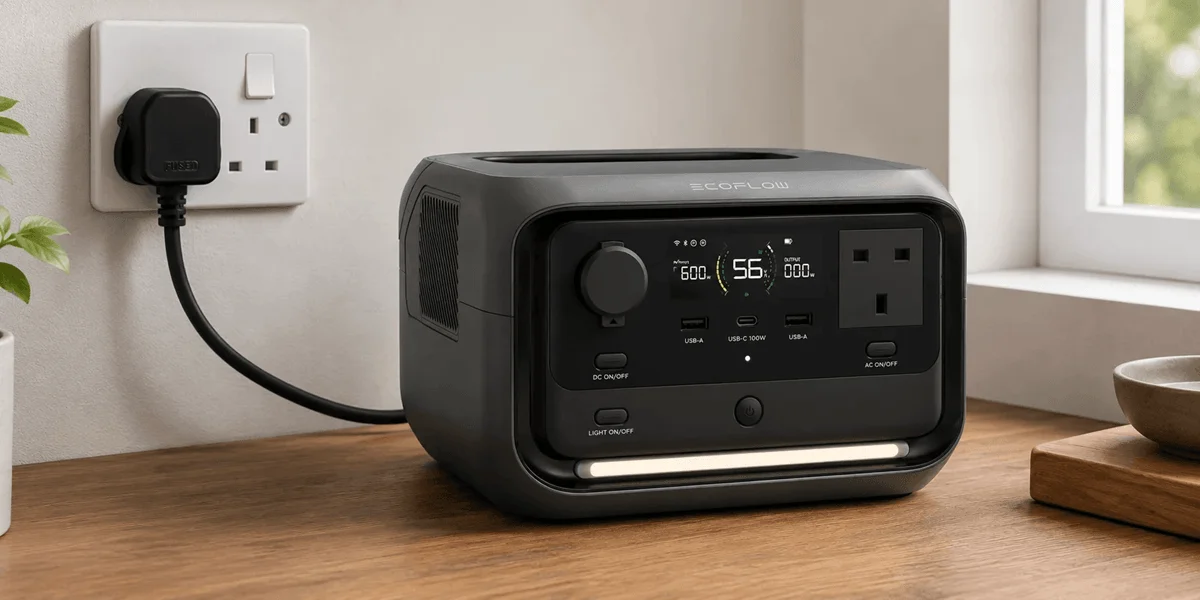
- A 9ms switchover, measured by StorageReview, is quick enough for a router
- 4.7kg is light enough to carry between rooms as needed
- Expands to 858Wh with an extra battery if 286Wh runs short
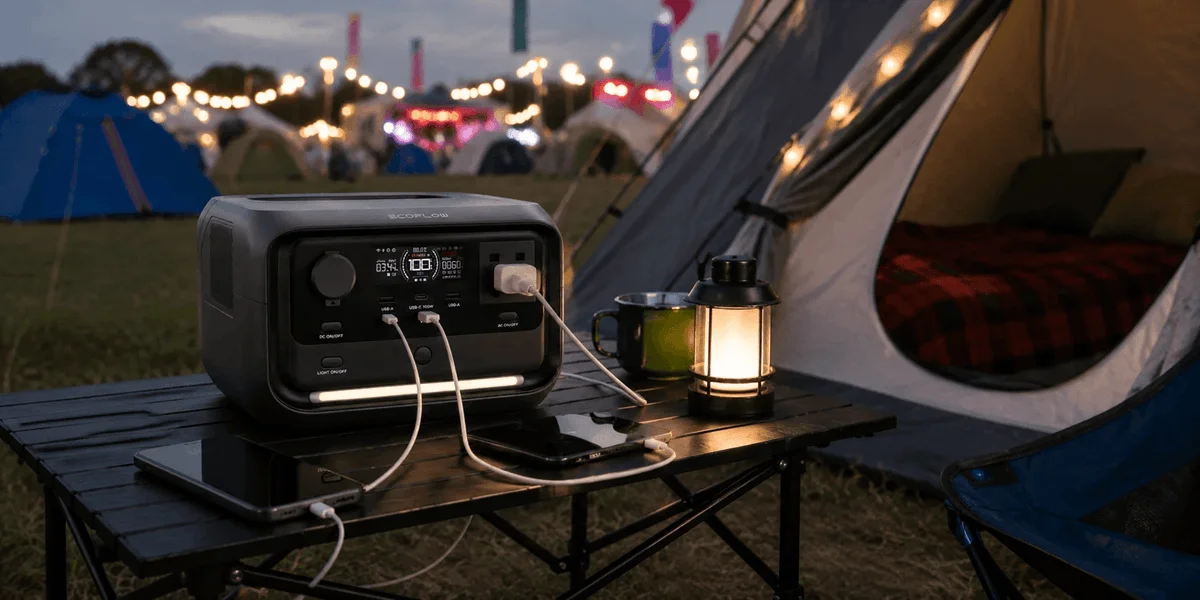
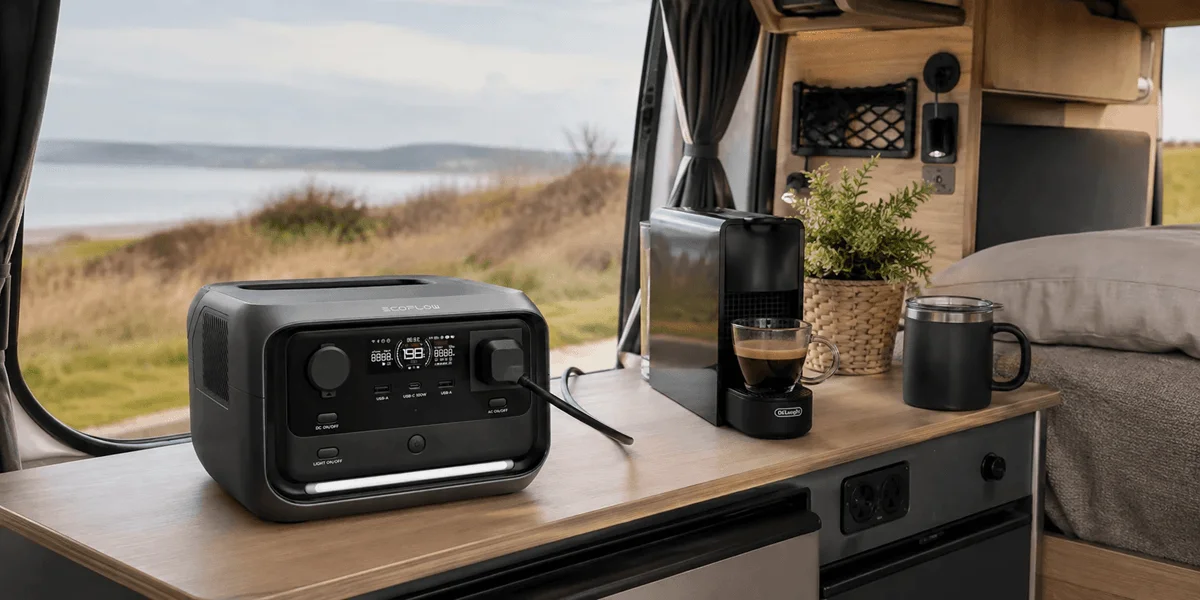
- 126W car output also works for camping and campervan trips
- 286Wh only covers small loads like a router, CPAP or laptop
- 600W won't run a kettle or a heater during a cut
- For home backup: check the Amazon UK listing, which currently includes a 110W solar panel you may not want.
The RIVER 3 Plus suits anyone who wants UPS backup for small everyday devices rather than a whole house. StorageReview clocked its switchover at 9ms, quick enough to keep a router, CPAP machine or laptop running in a power cut. At 4.7kg it’s easy to move between rooms, and its 126W car output helps on camping and campervan trips. It only covers light loads, so if you need backup for several appliances, choose the Delta 3 Plus instead.
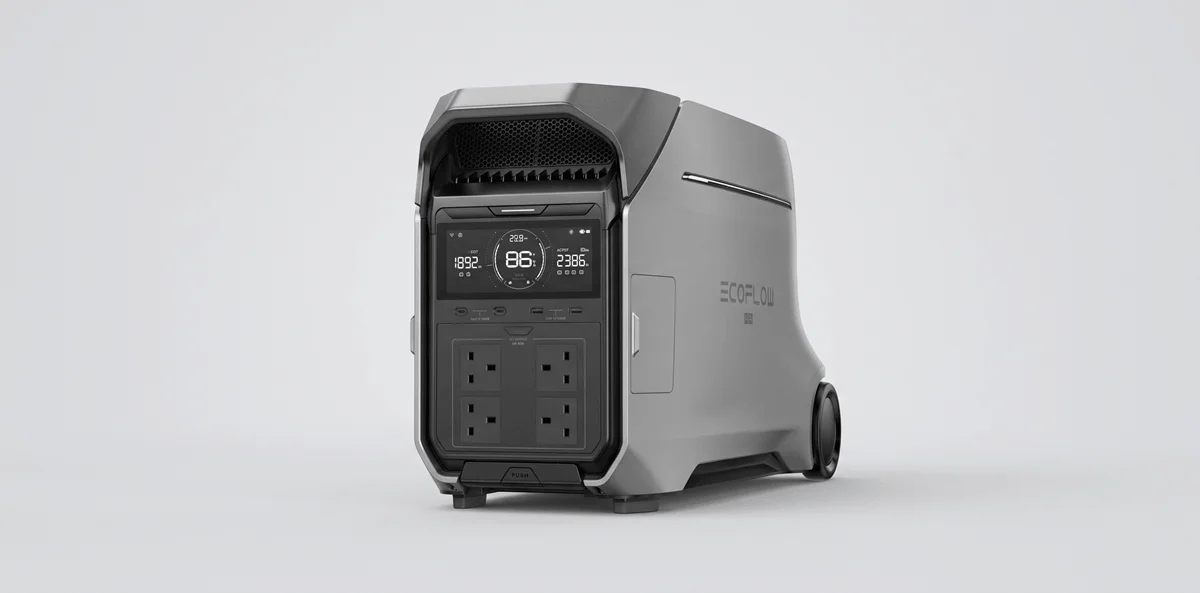
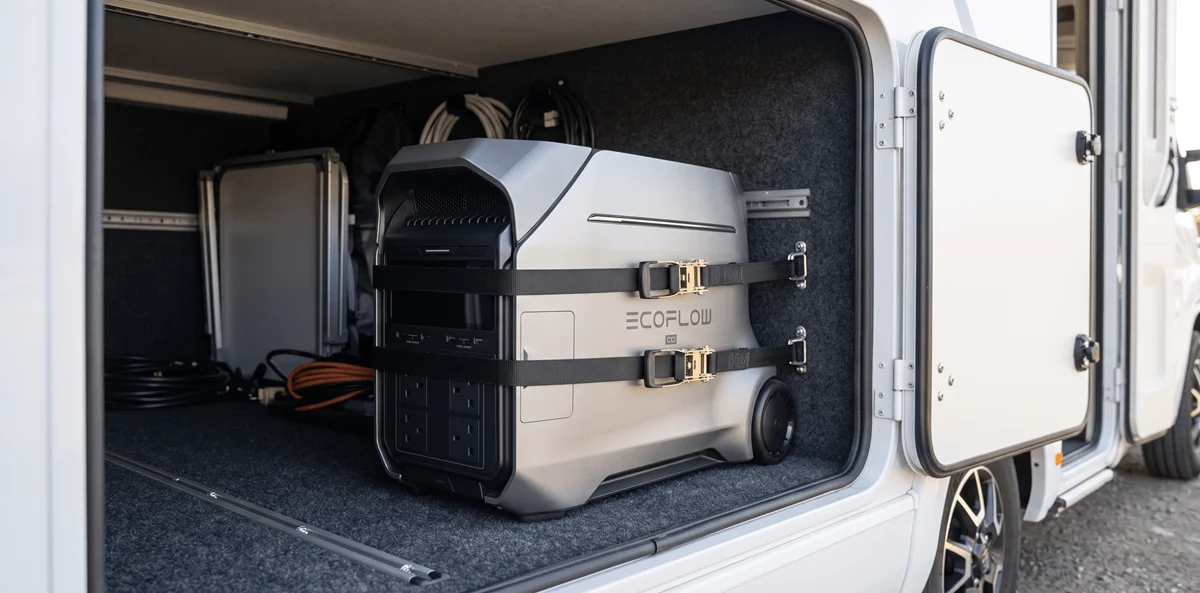
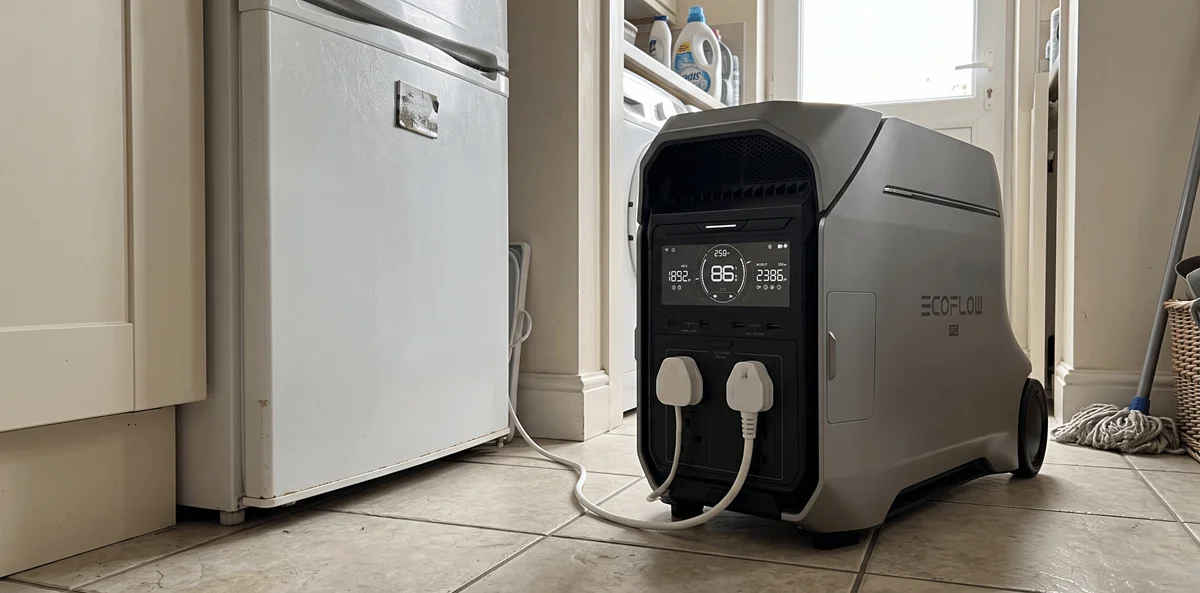
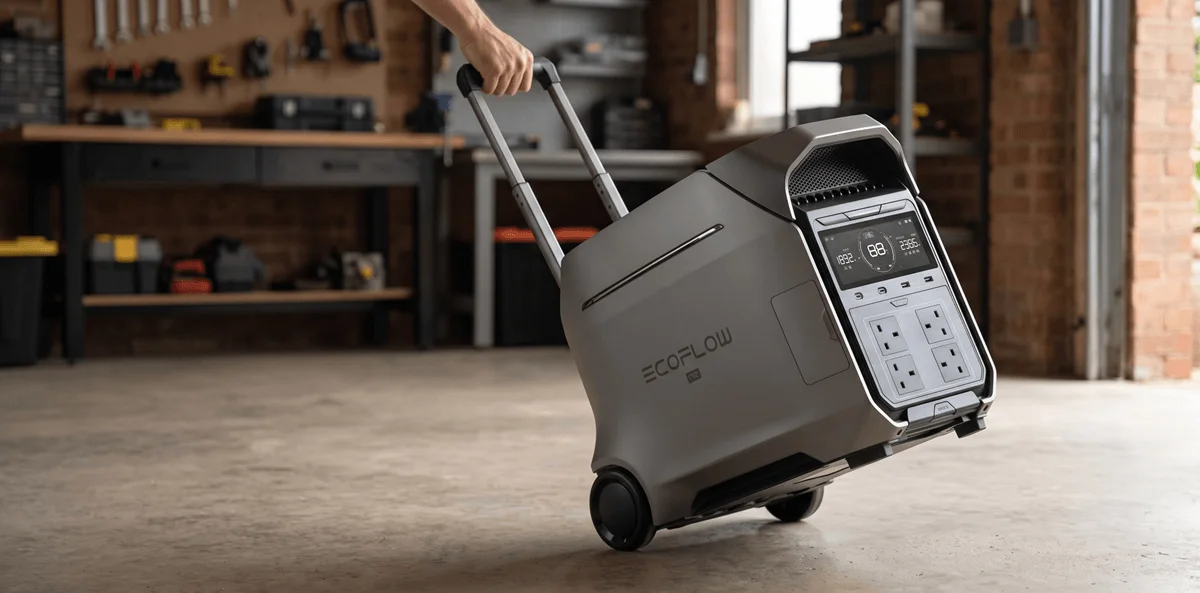
EcoFlow Delta Pro 3: 4,096Wh, 4,000W output and 10ms switchover
| Capacity | 4096Wh |
| AC Output | 4000W |
| Solar Input | 2600 max |
| MPPT Ports | Dual |
| Battery | LiFePO4 |
| UK Warranty | 5 years |
- 4,096Wh and 4,000W can keep a router, lights and a fridge going through a long power cut
- EcoFlow's manual gives a 10ms standby UPS transfer, for kit that accepts a standby type
- Solar can refill it during a long cut, through a 1,600W port and a 1,000W port
- In a motorhome, a reviewer in France used it for a week with a 1,000W plancha grill
- House wiring needs a certified electrician and an isolation switch. Both Manual Transfer Switch bundles were out of stock on 11 October 2026
- It is standby, not online, and the AC timeout must be changed for fridges
- For solar and motorhomes, the two ports use different voltage windows, no solar cable is listed, and the main unit is unrated for wet weather
Outdoor Gear Lab picks the Delta Pro 3 as its best for home backup. A reviewer in Poland praises it for power cuts and UPS use. For solar, treat 2,600W as a ceiling, not a daily yield. If you need a transfer switch fitted soon, check stock first.
Also Worth Considering for Home Backup
| Model | Why consider it | The catch | Link |
|---|---|---|---|
| Bluetti Elite 200 V2 | A large 2,073.6Wh battery and 2,600W of output, backed by a 5-year warranty. Trusted Reviews recommends it for home backup. | No expansion option, and Bluetti’s manual rules it out for servers that need a high-performance UPS. | Bluetti Elite 200 V2 review |
| EcoFlow Delta 3 Max Plus | 2,048Wh with a 10ms UPS switchover and HID support. It’s expandable to 10kWh with two DELTA Pro 3 extra batteries, so it scales for multi-day power cuts. | At 22.1kg it’s not something you move around the house, and there’s no built-in light. | EcoFlow Delta 3 Max Plus review |
| Bluetti Apex 300 | 2,764.8Wh, with a battery rated for 6,000+ cycles. Its 2,400W of solar input across two inputs keeps it topped up through an extended rural power cut. | At 38kg you’ll want a trolley to move it, and USB or 12V devices need the optional Hub D1 since the unit itself has neither. | Bluetti Apex 300 review |
| Anker SOLIX C1000 Gen 2 | A full mains recharge in around 49 minutes and a straightforward 5-year UK warranty make it an easy 1kWh all-rounder for home backup. | The fan runs loud at full power (Outdoor Gear Lab called it "frustratingly loud"), and it isn’t expandable. | Anker SOLIX C1000 Gen 2 review |
Which One Should You Buy?
Find your situation below for a direct recommendation.
| If you | We recommend |
|---|---|
| Protect small essentials like a router, CPAP or laptop | EcoFlow RIVER 3 Plus: 286Wh with an under-10ms switchover (StorageReview measured 9ms). It’s currently sold on Amazon UK with a 110W solar panel. |
| Want to keep a fridge, router and lights on | EcoFlow Delta 3 Plus: 1,024Wh with an under-10ms switchover keeps your essentials running without a flicker. |
| Need a full day or more of essentials | Bluetti Elite 200 V2: 2,073.6Wh, which by our sum runs a fridge-freezer for about 1.8 days at roughly 1kWh a day. |
| Want a multi-day, expandable setup | EcoFlow Delta 3 Plus: expandable to 5kWh with extra batteries, sold separately. For more, the EcoFlow Delta Pro 3 expands to 12kWh. |
| Need 3,000W, or four sockets at 2kWh | EcoFlow Delta 3 Max Plus: 2,048Wh, 3,000W output and four UK sockets. Two DELTA Pro 3 extra batteries take it to 10kWh. |
| Need 4kWh, or loads up to 4,000W | EcoFlow Delta Pro 3: 4,096Wh and 4,000W through four UK sockets. At 51.5kg, it needs a fixed spot. |
| Live rurally on an overhead line with long power cuts | Bluetti Apex 300: 2,764.8Wh, 3,840W continuous output and 2,400W of solar input to recharge through an extended cut. |
| Want a 1kWh all-rounder with a 5-year warranty | Anker SOLIX C1000 Gen 2: 1,024Wh, a 5-year UK warranty and a full mains recharge in around 49 minutes. |
| Run a home office, NAS or home server | EcoFlow Delta 3 Plus: under-10ms switchover with NAS and HID support, so a connected PC or NAS can shut down safely. The Bluetti Elite 200 V2 isn’t for servers, as Bluetti’s manual rules it out. |
| Already have solar that died in a power cut | Any pick on this page: fitted solar shuts itself off in a cut by design (anti-islanding). A standalone unit like these sidesteps the problem. |
How Often Do UK Power Cuts Actually Happen?
The average UK household experiences around 0.4 power cuts a year and loses roughly 36 minutes of supply in total. That’s according to Ofgem’s latest electricity distribution report. Both figures have fallen sharply since 2009/10, frequency down 38% and duration down 43%. For most homes, a power cut is a rare inconvenience, not a regular event.
That’s why the 1kWh-class picks on this page, like the EcoFlow Delta 3 Plus and Anker SOLIX C1000 Gen 2, suit most UK homes. You’re covering an evening, maybe an overnight, not a week without power.
The 2kWh-plus units are the Bluetti Elite 200 V2, EcoFlow Delta 3 Max Plus, Bluetti Apex 300 and EcoFlow Delta Pro 3. They earn their keep in rural homes on overhead lines. Those see roughly twice as many power cuts as parts of north-west England. They also suit homes running medical equipment, and anyone who’s sat through a long storm cut.
To check for a cut in your area or report one, call 105. It’s free. If you or someone in your household depends on power for medical reasons, sign up to the Priority Services Register. It flags you for priority reconnection.
Is A Power Station Better Than A Desktop UPS?
A desktop UPS keeps a computer alive for long enough to save your work and shut down safely, typically 5 to 20 minutes, not hours. A power station gives you hours instead of minutes. It runs your fridge and router too, and doubles as camping or van power when there isn’t a power cut.
Brands like APC and PowerWalker dominate the desktop UPS space, and most still use sealed lead-acid batteries that need replacing every three to five years. A power station uses LiFePO4 cells rated for thousands of cycles. It’ll run your fridge through a multi-hour cut, not just carry a PC to safe shutdown.
The counterpoint: a desktop UPS is cheaper, smaller, and purpose-built for computers and network gear. If all you want is a safe shutdown for a PC or NAS, it does that job for less money and less space.
Buy a desktop UPS if: you only need to protect a computer or router for a few minutes during short blips.
Buy a power station if: you want your fridge, lights and devices running for hours, plus a battery you can take camping.
How Long Will a Power Station Run Your Essentials in a Power Cut?
Most UK power cuts are short, but it helps to know your runtime for the longer ones. Runtime depends on two things: how much your devices draw in watts, and how much capacity your power station holds in watt-hours (Wh). A bigger battery and a lower-draw appliance both stretch your runtime further.
Here is a rough guide based on a 1,000Wh power station:
| Appliance | Typical UK draw | Runtime on a 1,000Wh unit | What this means |
|---|---|---|---|
| Fridge | 100 to 150W (cycling, not constant) | Roughly 6 to 14 hours | Keeps food safe through most short-to-medium power cuts |
| Chest freezer | 80 to 120W (cycling) | Roughly 8 to 16 hours | Enough to stop frozen food defrosting overnight |
| Broadband router | 10 to 20W | 50+ hours | Barely dents the battery, keeps you online for days |
| LED TV (32 to 50in) | 80 to 100W | Roughly 9 to 11 hours | Enough for an evening’s viewing across several nights |
| Kettle | 2,000 to 3,000W | A handful of boils, not continuous use | Only higher-output or X-Boost models run a kettle at all, and only in short bursts |
| CPAP (no humidifier) | 30 to 40W | Roughly 25 to 30 hours | Several nights of uninterrupted sleep therapy |
A larger 2,000Wh unit, such as the EcoFlow Delta 3 Max Plus, roughly doubles these figures. The 4,096Wh EcoFlow Delta Pro 3 roughly quadruples them, useful if you’re planning for extended power cuts. For a runtime based on your own appliances rather than these averages, use our sizing calculator instead of guessing.
Before You Buy A few things worth checking before you choose a unit:
- Capacity vs your real load. Add up the wattage of what you actually need to run, not just the biggest number on the box.
- UPS switchover speed. Anything over 20ms can cause smart devices, routers or medical equipment to briefly drop out during the switch.
- Expandability. Some units let you add extra battery packs later; others are fixed capacity for life.
- Socket count and type. Make sure there are enough UK three-pin sockets for everything you plan to plug in at once.
- Extra costs. Solar panels and expansion batteries are sold separately and can add a meaningful amount to the total, so factor that in before you decide.
Frequently Asked Questions
For most UK homes, our top pick is the EcoFlow Delta 3 Plus, with an under-10ms UPS switchover and NAS support. The Bluetti Elite 200 V2 suits a full day or more of essentials, and the EcoFlow Delta Pro 3 suits longer cuts. The EcoFlow RIVER 3 Plus covers a router or CPAP. Rural homes wanting strong solar recharge should look at the Bluetti Apex 300, with 2,400W of solar input.
Yes, if it has enough output. A typical UK fridge draws 100 to 200W. A 1,000Wh unit can run one for several hours, and a 2,000Wh unit covers most of a day.
UPS means the power station switches to battery the instant the mains fails, so connected devices never notice. If you have a router, smart-home hub or home office equipment, you want UPS.
No, a portable power station runs essentials such as the fridge, router, lights and devices. It won’t run wired-in loads like an electric shower or cooker. For whole-home cover you need a much larger home battery system.
An indoor generator is the name people often give a battery power station, because it’s safe to run inside. It stores electricity in a battery and makes no fumes. Petrol and diesel generators produce carbon monoxide and must run outdoors. Our power station vs generator guide explains the difference.
Yes, a power station keeps a broadband router on through a power cut. A router draws 10 to 20W, so a 1,000Wh unit runs one for 50+ hours. A unit with an under-10ms UPS switchover, such as the EcoFlow Delta 3 Plus, keeps it running without a restart. The EcoFlow RIVER 3 Plus is enough if a router is all you need.
Yes. Petrol generators produce carbon monoxide and must stay outdoors. Power stations produce no fumes and are safe indoors, which is a key reason UK homeowners prefer them.
For most homes, the simplest method is running extension leads from the power station’s AC sockets to essentials like the fridge, router and a lamp. If you want a more permanent setup, an electrician can fit a transfer switch that lets the power station feed a chosen circuit safely. Never plug a power station into a wall socket to “backfeed” your house wiring. This can send power back down the line and put engineers working to restore supply at risk.
Most UK power cuts last under an hour and are caused by local faults or planned maintenance work. Storm damage can cause longer power cuts, sometimes running into days in rural areas where engineers have further to travel to reach the fault. Live somewhere prone to storms? Size your power station for at least a full day of essentials, not just a couple of hours.
Charge it fully from the mains and keep it topped up. Many units also charge from solar, so you can recharge if a long power cut prevents mains charging.
For most households, only if you value the peace of mind, since the average UK home loses just 36 minutes of power a year. It’s clearly worth it if you rely on medical equipment, live rurally on overhead lines or work from home. The same goes if you keep a freezer full enough that losing it would hurt. For everyone else, it’s a nice-to-have rather than a necessity.
A rural home on overhead lines suits a 2kWh-plus power station, because cuts there are more frequent and longer. The Bluetti Elite 200 V2, EcoFlow Delta 3 Max Plus, Bluetti Apex 300 and EcoFlow Delta Pro 3 all fit that bracket. The Delta Pro 3 takes 2,600W of solar and the Apex 300 takes 2,400W, which helps you recharge in a long cut. Storm damage can cause cuts of days, so size for at least a full day of essentials.
No, a plug-in power station needs no electrician and no work on your consumer unit. You plug your fridge, router and lamps straight into its sockets. An electrician is only needed if you want a transfer switch, so the power station can feed a chosen circuit. Never plug it into a wall socket to backfeed your house wiring.
A power station covers your essentials, not a whole house, no portable unit realistically runs a full home’s heating, cooking and sockets together. A fridge, router, some LED lighting and phone charging typically draws under 200W combined, so a 1,000Wh unit covers several hours. Use our sizing calculator to match capacity to your own essentials list.