What Is the Bluetti Elite 200 V2 and Who Is It For?
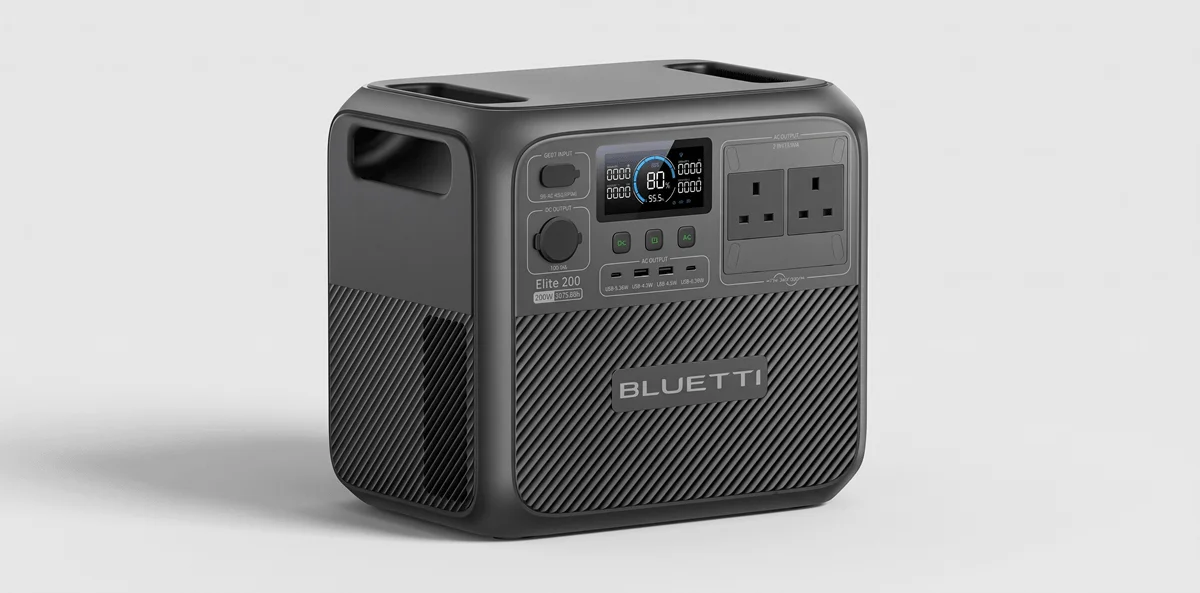
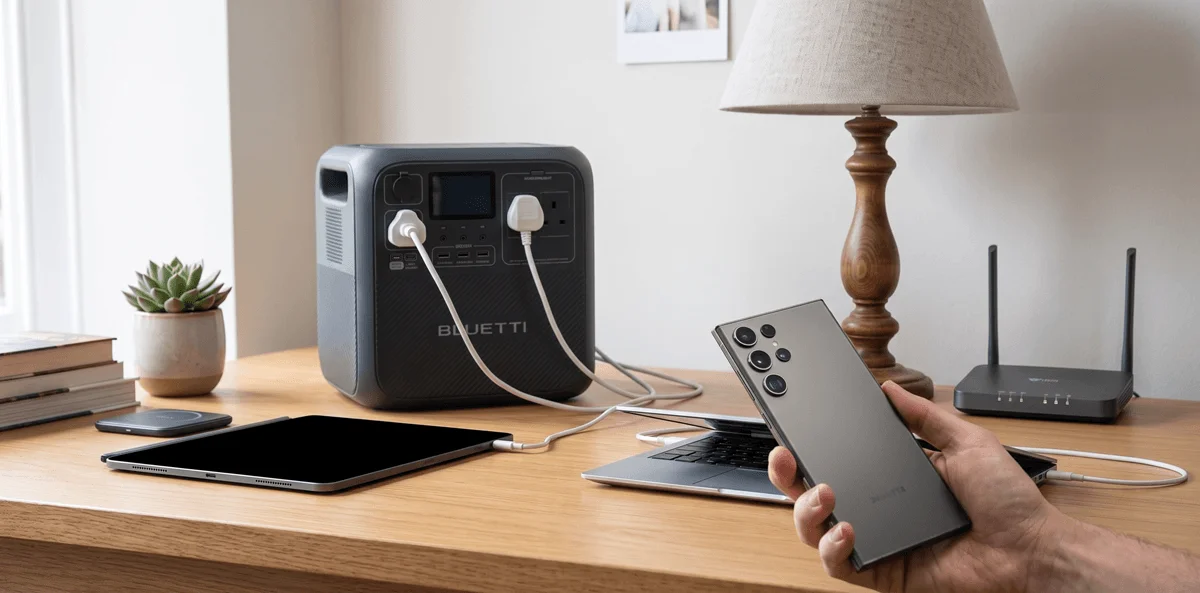
The Bluetti Elite 200 V2 is a 2,073.6Wh LiFePO4 power station for the UK, with 2,600W of output and two three-pin sockets. It suits campervans, long power cuts and fixed off-grid use. At 24.2kg with no wheels, it’s built to stay put, not to be carried around.
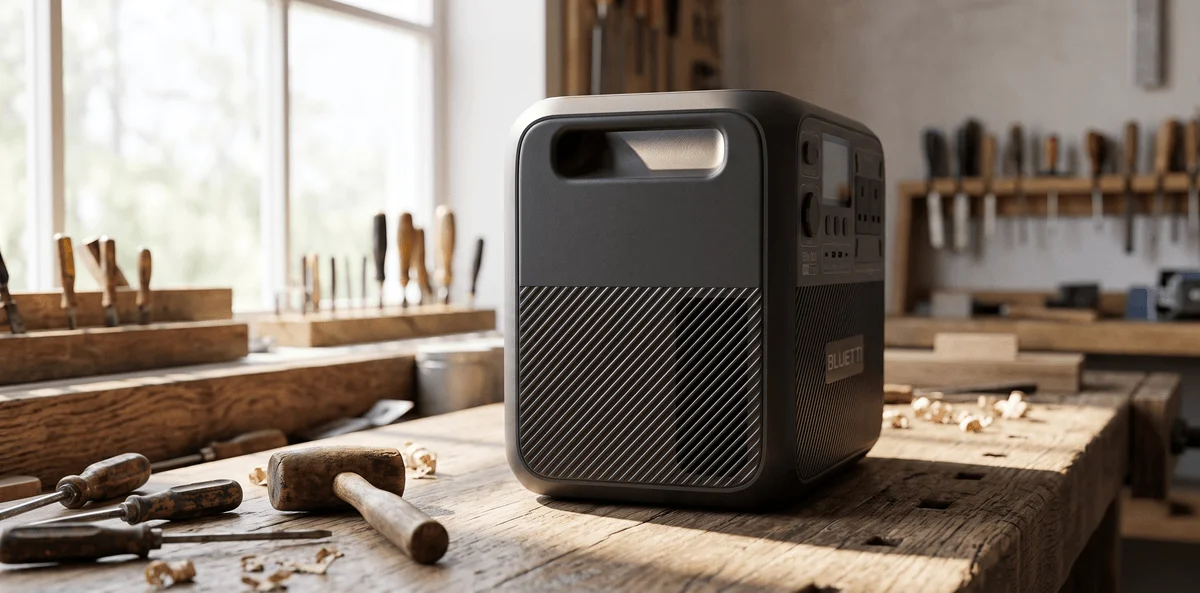
Here’s a UK-specific point. The UK unit has two three-pin sockets, where the US version has four, because the UK plug is larger, as Camping Secrets explains. The unit measures 350 x 250 x 323.6mm, according to Bluetti UK. It has two integrated lifting handles, and Trusted Reviews notes there are no wheels and no light.
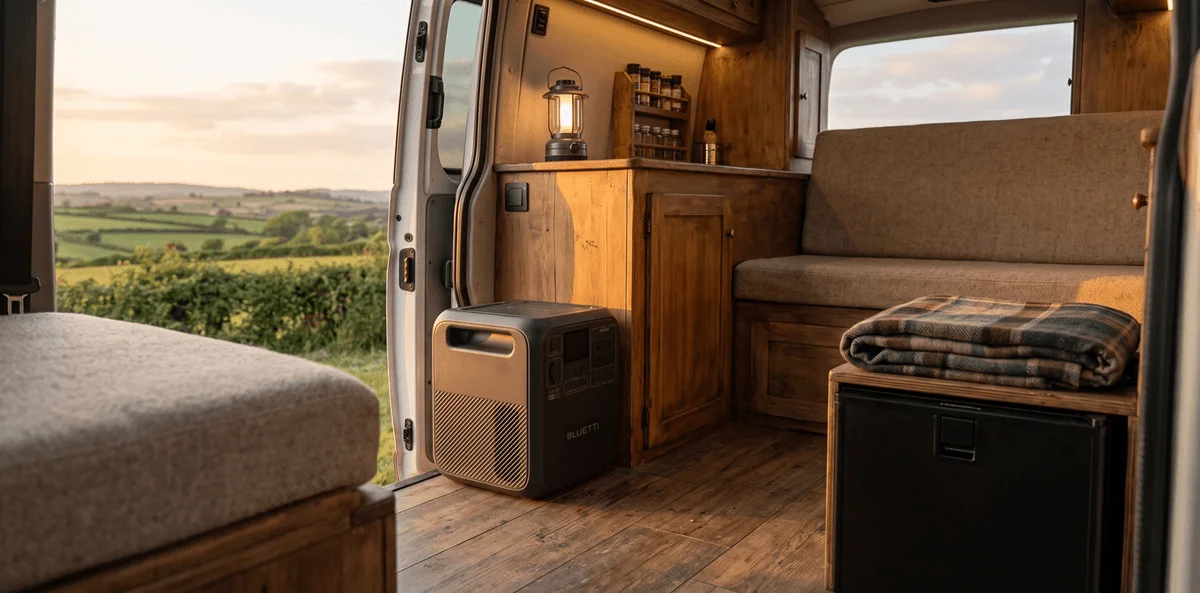
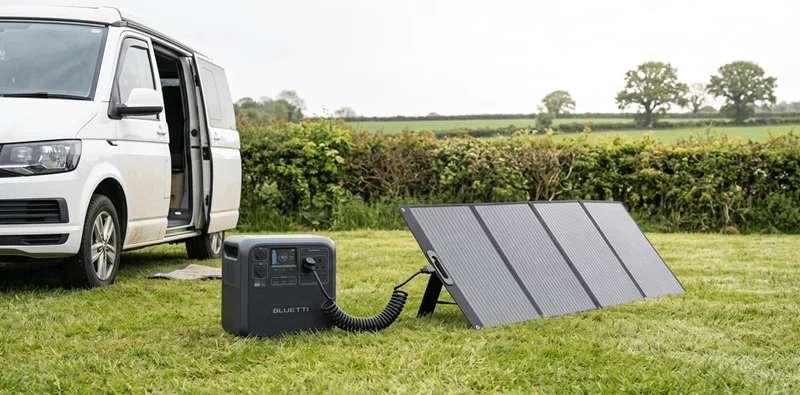
Campervans are the clearest fit. Bluetti UK lists road trips among its uses, and Trusted Reviews says it suits a van. The catch is the 24.2kg weight and having only two sockets. Our best power stations for campervans show how it compares.
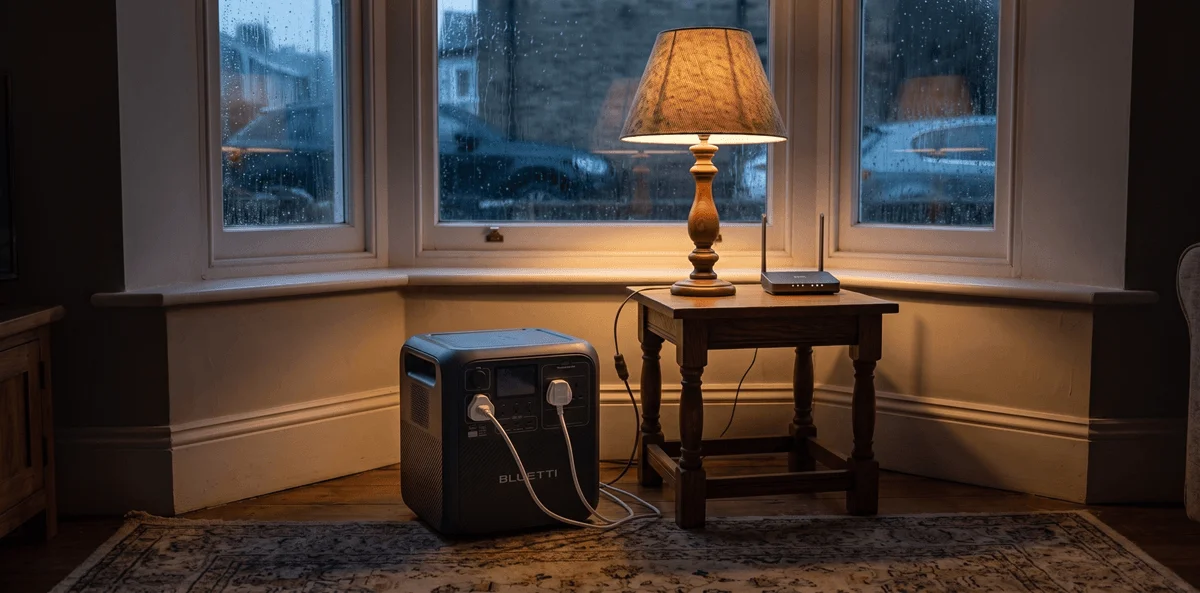
Home backup is the second use. Bluetti UK lists it, and Trusted Reviews says to buy it if you want dependable home backup power. In a power cut it can run a router or a fridge-freezer for a day or more (our sums, below). The catch is that it can’t be expanded.
Off-grid use is the third. The unit takes up to 1,000W of solar input, but Bluetti UK doesn’t list a solar cable in the box.
This review covers the UK unit. Its sockets are three-pin, its output is 230V, and Bluetti UK backs it with a 5-year warranty. The US model differs, so we lean on UK-unit tests and leave US test results out, apart from one lab test that we label.
It isn’t a camping unit to carry to a pitch. Trusted Reviews says there are better choices for powering your camping trip. There was also never an Elite 200 V1. Trusted Reviews reports that Bluetti calls this an update for the AC200P, so the V2 label doesn’t point to an earlier Elite 200.
Key Specifications at a Glance
Most figures below come from Bluetti UK’s Elite 200 V2 spec table. Manual details come from the Bluetti 230V user manual. The handle detail comes from Camping Secrets’ UK-unit review, and the no-wheels note from Trusted Reviews.
Two numbers matter most. 2,073.6Wh is the tank: how much energy it holds. 2,600W is the tap: how much it can deliver at once.
A big tank with a narrow tap runs small kit for ages. This one has a wide tap too.
| Specification | Detail |
|---|---|
| Capacity | 2,073.6Wh (54Ah) |
| Battery type | LiFePO4 (lithium iron phosphate) |
| Cycle life | 6,000+ cycles to 80% original capacity |
| AC output | 2,600W total, 230V, 11.3A, pure sine wave |
| AC sockets (UK) | 2 UK three-pin sockets |
| Power Lifting mode | Pure resistive loads up to 3,900W, off by default |
| USB-C | 2 x 100W maximum |
| USB-A | 2 x 15W (5V/3A) |
| 12V car socket | 1 x 12V/10A |
| Total output ports | 7 |
| AC input | 2,300W maximum |
| Mains charge, Bluetti claim | 80% in 1.1 hours (TurboBoost) |
| Solar input | 1,000W maximum, 12V to 60V, 20A maximum |
| Maximum combined input | 2,400W (AC plus DC) |
| Car socket charging | 96W (12V) or 192W (24V) |
| UPS switchover | 15ms or less |
| Pass-through charging | Yes |
| Expandable | No |
| Noise | 16dB at low loads, about 50dB at maximum output |
| Weight | 24.2kg |
| Dimensions | 350 x 250 x 323.6mm |
| Handles and wheels | Two lifting handles, no wheels |
| Operating temperature | -20°C to 40°C discharging, 0°C to 40°C charging |
| Weather protection | No IP rating published |
| App control | Bluetti app over Bluetooth and Wi-Fi |
| Warranty | 5 years |
| In the box | Elite 200 V2, AC charging cable, grounding screw, user manual |
Elite 200 V2 vs AC200L: What Actually Changed?
The Elite 200 V2 has slightly more capacity than the AC200L (2,073.6Wh against 2,048Wh) and more output (2,600W against 2,400W). The AC200L takes more solar, at 1,200W against 1,000W. Those figures come from Bluetti UK’s own FAQ table. A newer name doesn’t mean it’s better on every row.
| Specification | Elite 200 V2 | AC200L |
|---|---|---|
| Battery capacity | 2,073.6Wh | 2,048Wh |
| AC output | 2,600W | 2,400W |
| AC input | 2,300W maximum | 2,400W maximum |
| Solar input | 1,000W maximum, 12V to 60V, 20A maximum | 1,200W maximum, 12V to 145V DC, 15A |
So what changed? The Elite 200 V2 gives you 25.6Wh more capacity (our sum) and 200W more output. In exchange, it takes 100W less from the mains and 200W less from solar.
If you plan a large solar array wired at higher voltage, the AC200L’s wider range matters. If you mostly charge from the mains or a van alternator, the lower solar ceiling costs you little. We’ve left out the AC200L’s weight and expandability, because we haven’t verified them.
How Fast Does the Bluetti Elite 200 V2 Charge?
Bluetti says the Elite 200 V2 charges to 80% in 1.1 hours on the mains, and UK tests agree. Trusted Reviews measured a full recharge in 69 minutes in Turbo mode. Camping Secrets reports 63 minutes to 80% and 70 minutes to full.
Three charging modes set the speed: Standard, Turbo and Silent. Trusted Reviews says Turbo charges at the maximum 2,300W, Silent limits charging to 800W, and default Standard charges at up to 1,200W. You choose the mode in the Bluetti app. Bluetti also lists 2,400W as the maximum combined input from AC and DC together.
The catch is that Standard is the default, and it tops out at 1,200W. You’ll want Turbo to match the quoted times. Camping Secrets also noticed a small amount of fan noise when Turbo charging, so it isn’t silent while it does the work.
What does that mean in practice? Bluetti’s 1.1 hours is about 66 minutes (our conversion), so Camping Secrets’ 63 minutes to 80% is a little quicker than the claim. A lunch break gets you most of the way back. A full recharge takes a little longer, at 69 to 70 minutes in the two UK tests.
How Much Solar Can It Take in the UK?
The Elite 200 V2 takes up to 1,000W of solar, from 12V to 60V. Bluetti says a full solar charge takes about 2.4 hours. That needs ideal sun and enough panels. UK weather will make it slower, often much slower.
Trusted Reviews is more cautious. It says you’d get a full solar recharge within three hours, in ideal conditions with enough panels. That’s close to Bluetti’s claim. In the UK, a 200W panel often delivers 100 to 140W.
One 200W panel at about 120W would need roughly 17 hours of decent light to fill 2,073.6Wh (our sum). The 1,000W figure is a ceiling, not a typical day. It only applies if you connect enough panels and the sun cooperates.
Two points to plan for. The 60V ceiling limits how you can wire panels together. Bluetti UK also doesn’t list a solar cable in the box, so you’ll need to buy one.
At home, Trusted Reviews says you can set UPS mode to prioritise solar. Our UK solar charging guide explains panel sizing for British weather, and our page on the best solar generators in the UK compares other options.
What Can the Bluetti Elite 200 V2 Actually Power?
On one charge, the Bluetti Elite 200 V2 should run a fridge-freezer using about 1kWh a day for about 1.8 days. A 60W laptop lasts roughly 29 hours and a 10W Wi-Fi router roughly 176 hours. Those are our sums, using 85% of the 2,073.6Wh rated capacity.
The table below uses 1,763Wh of usable energy, which is 85% of the 2,073.6Wh rating, and typical UK appliance draws. These are estimates, not measurements, and your own appliances will vary.
Four rows come from published sources, not our sums. The kettle and washing machine rows are from Trusted Reviews. The hair dryer and microwave rows are listed by Camping Secrets.
| Appliance | Typical draw | Estimated runtime on 1,763Wh usable |
|---|---|---|
| Fridge-freezer (cycling, not constant) | About 1kWh a day | Around 1.8 days |
| Wi-Fi router | 10W | Around 176 hours (7.3 days) |
| Laptop | 60W | Around 29 hours |
| 55-inch LED TV | 100W | Around 17.6 hours |
| Electric blanket | 80W | Around 22 hours |
| CPAP machine (no humidifier) | 40W | Around 44 hours |
| Kettle (full boils) | Needs Power Lifting mode if 3kW | About 13 boils (Trusted Reviews estimate) |
| Hair dryer | 1,300W | About 1.2 hours (Camping Secrets) |
| Microwave | 600W | About 2.6 hours (Camping Secrets) |
| Washing machine | One 40°C cottons load | About a third of the charge left (Trusted Reviews test) |
Power Lifting mode is what lets a 3kW kettle run. Bluetti says it supports pure resistive loads of up to 3,900W, with kettles, electric blankets and hair dryers as examples.
The Bluetti manual says Power Lifting is off by default. The mode is for resistive loads only, so don’t count on it for motor-driven kit. Trusted Reviews explains that the mode limits voltage and current. The unit doesn’t supply more than its 2,600W.
The fridge figure assumes a fridge-freezer that uses about 1kWh a day while cycling. Trusted Reviews says the unit runs a fridge for more than a day, so our 1.8 days sits above that floor. Fridges cycle on and off, so the average draw sits far below the running wattage. A fridge that works harder will use more.
Our 85% rule is cautious. Trusted Reviews measured at least 1.88kWh delivered at a 200W load. Round-trip efficiency came out at 82.1%, and best output efficiency was 96.7% at a constant 1,000W. Trusted Reviews also ran a washing machine through a full 40°C cottons load, finishing with about a third of the charge left.
What Can It Not Run?
Any load above 2,600W is out, unless it’s a pure resistive load of up to 3,900W in Power Lifting mode. A 3kW kettle, for example, needs that mode, because 3kW is above the 2,600W AC rating. Heating kit drains the battery fast, so keep high-wattage loads short.
With only two three-pin sockets, you can’t plug in a crowd of mains kit either. Servers and workstations that need a high-performance UPS are also off the list, according to Bluetti’s manual.
Does the 15ms UPS Switchover Work for UK Homes?
The Bluetti Elite 200 V2 works as a home UPS, with limits. Bluetti says the unit switches to battery within 15ms, and Trusted Reviews recommends it for dependable home backup. The manual says it isn’t meant for data servers or workstations that need a high-performance UPS.
A UPS keeps your kit running when the mains drops. The Bluetti manual lists the switchover as 15ms or less, which is 15 thousandths of a second. That’s slower than the 10ms listed for the EcoFlow Delta 3 Max Plus and the Anker SOLIX C2000 Gen 2. The Jackery Explorer 2000 v2 lists under 20ms.
In a lab test of a US unit, StorageReview ran roughly 1kW of server equipment through mains cuts without reboots. That was a US unit, and the manual’s caveat still stands. Treat it as encouraging, not as a guarantee.
By default the Elite 200 V2 acts as a standard UPS, says Trusted Reviews. You can set it to prioritise solar, or use Time Control mode to set a working battery range. Bluetti UK lists pass-through charging too. For more options, see our best power stations for home backup.
Can You Charge the Elite 200 V2 While Driving?
Yes, the Elite 200 V2 charges from a car socket, but slowly. The socket delivers 96W on 12V or 192W on 24V. Bluetti’s Charger 1 alternator charger, sold separately, delivers up to 560W and should refill the unit in around four hours of driving.
Bluetti UK lists 96W on 12V and 192W on 24V. Trusted Reviews says a full recharge that way takes more than 17 hours of driving. That’s a top-up trick, not a plan.
Charger 1 is the proper route. Bluetti’s Charger 1 page lists up to 560W, and Bluetti UK’s Elite 200 V2 page calls it 6X faster than conventional car chargers. Camping Secrets puts a full charge with Charger 1 at approximately 4.2 hours. Our sum is 3.7 hours before losses (2,073.6Wh divided by 560W).
Charger 1 is sold separately or as a bundle on Bluetti UK and Amazon UK. Bluetti also sells a Charger 2 rated up to 1,200W, but the Elite 200 V2’s own DC input stops at 1,000W. Bluetti UK doesn’t list a car cable in the box either. Those extras add to what you spend, so factor them in if you’re fitting a van.
The alternator route suits a van that moves most days. If yours sits still for weeks, you’ll rely on solar instead.
What Ports Does the Bluetti Elite 200 V2 Have?
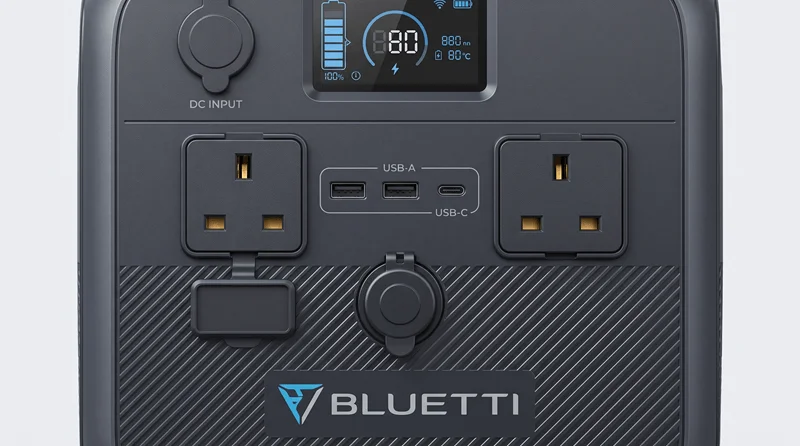
The Bluetti Elite 200 V2 has seven outputs, led by two UK three-pin sockets. The rest are two USB-C ports (up to 100W each), two USB-A ports (15W each) and a 12V/10A car socket. Bluetti UK says it powers up to seven devices at once.
- 2 x UK three-pin sockets Share the 2,600W total output at 230V, pure sine wave, 11.3A
- 2 x USB-C Up to 100W each, enough for a 60W laptop charger
- 2 x USB-A 15W each (5V/3A), for phones and small gadgets
- 1 x 12V car socket Rated 12V/10A, for 12V van gear
- Pass-through charging Run your devices while the unit recharges
The Bluetti app controls the unit over Bluetooth and Wi-Fi, and you can pick the charging mode there, according to Trusted Reviews. Pass-through charging means a laptop on USB-C can keep working while the unit recharges. The catch is the socket count, so check it before buying if you plan to run several mains appliances at once. If you need more than two mains plugs, the EcoFlow Delta 3 Max Plus lists four UK sockets.
How Quiet Is the Bluetti Elite 200 V2?
The Bluetti Elite 200 V2 is quiet at light loads and noticeably louder at full output. Bluetti says 16dB under low power loads. Camping Secrets reports about 16dB at lower loads and approximately 50dB under maximum output.
Fan noise rises with load. Bluetti’s manual gives a range of 16dB to 50dB. Turbo charging adds a little fan noise too, says Camping Secrets. Trusted Reviews gives no decibel figure, but found it stable and quiet even at its 2,600W maximum.
The manual’s range leaves a 34dB gap between light load and full output (our sum), and you’ll notice it. So at light loads you’ll barely hear it, but plan on hearing it in a small van when you push it hard. Bluetti’s 16dB applies under low power loads only, so don’t expect it at full tilt.
Battery Life: How Long Will It Last?
Bluetti rates the Elite 200 V2 for 6,000+ cycles to 80% of its original capacity. At one full cycle a day, that’s about 16 years by our sum. It’s a rating, not a track record, and the warranty runs for 5 years.
A cycle is one full charge and discharge. In plain terms, Bluetti says the battery should still hold 80% of its capacity after 6,000 of them.
The chemistry is LiFePO4, short for lithium iron phosphate. It wears out more slowly than older NMC packs. Bluetti describes the cells as automotive-grade. That’s the brand’s wording, not an independent rating.
Here’s the working for one full cycle a day. 6,000 divided by 365 is about 16 years. That isn’t a Bluetti promise, and it assumes a full cycle every single day. At one cycle a week, that’s about 52 a year, so the 5-year warranty runs out long before the cycles do.
Against the EcoFlow, Anker and Jackery 2kWh rivals named on this page, the Elite 200 V2 has the highest published cycle count. The Anker SOLIX C2000 Gen 2 and Jackery Explorer 2000 v2 list 4,000, and EcoFlow doesn’t publish a figure. We haven’t tracked durability ourselves, so treat the cycle figure as Bluetti’s claim.
A UK winter matters here. Bluetti UK lists discharging from -20°C to 40°C, so it keeps running in the cold. The manual’s charging range is 0°C to 40°C, so a frozen van needs warming before you recharge.
Owner feedback is limited but positive. Bluetti UK’s product page showed 4.59 out of 5 from 37 reviews on 3 October 2026. Those sit on the seller’s own site, so treat them as a signal, not proof.
Bluetti Elite 200 V2 vs EcoFlow Delta 3 Max Plus vs Anker SOLIX C2000 Gen 2
Figures come from the UK pages of Bluetti, EcoFlow and Anker. Bluetti’s UPS time comes from its manual. On paper it’s close. The Elite 200 V2 leads on capacity and published cycle count, but it’s the heaviest of the three and the slowest to switch over.
The EcoFlow has more output and sockets. The Anker is lighter and, by brand claims, quicker to 80% on the mains. Read our EcoFlow Delta 3 Max Plus review for the full picture.
Who This Is NOT For
Anyone who carries a power station to a pitch or on foot. At 24.2kg with no wheels it’s a lift, not a carry. The Bluetti Elite 100 V2 weighs 11.5kg, according to Bluetti UK’s Elite 100 V2 page.
- Anyone who needs the quickest UPS switchover for sensitive kit. Its 15ms or less is slower than the 10ms of the EcoFlow and Anker rivals. The manual also rules it out for servers and workstations that need a high-performance UPS.
- Anyone who wants to add capacity later, because it can’t be expanded. The Anker SOLIX C2000 Gen 2, for one, grows up to 4kWh.
- Anyone who wants to use it in the rain or damp. The manual lists no IP rating and says not to use it in rain or high humidity.
Pros and Cons
- A 6,000+ cycle rating to 80%, on a 2,073.6Wh LiFePO4 battery
- Mains recharge to 80% in about an hour, backed by UK tests
- 1,000W solar input and Charger 1 alternator charging
- Power Lifting mode runs pure resistive loads up to 3,900W
- 5-year warranty and quiet at light loads
- 24.2kg with no wheels, so it isn't built for carrying
- Only two UK three-pin sockets
- Can't be expanded with another battery
- Switches over within 15ms, where EcoFlow and Anker list 10ms
- Charger 1, a solar cable and a car cable aren't listed in the box
Alternatives Worth Considering
- EcoFlow Delta 3 Max Plus: more output and more sockets Choose it if you need 3,000W, four UK sockets and expansion. It's lighter at 22.1kg and switches over in 10ms. The catch is that EcoFlow UK doesn't publish a cycle rating.
- Bluetti Elite 100 V2: the lighter Bluetti Choose it if you want a unit you can carry. It weighs 11.5kg, has a 1,000W solar input and a 10ms UPS. The catch is less storage, at 1,024Wh, and 1,800W of output.
- Bluetti Apex 300: more capacity, and expandable Choose it for a fixed install that needs more energy. It holds 2,764.8Wh, outputs 3,840W and expands. The catch is 38kg, which is far heavier.
- EcoFlow Delta 3 Plus: smaller, but it grows Choose it if you want to start at 1,024Wh and add batteries later, up to 5kWh. The catch is 1,800W of output, well below the Bluetti's 2,600W.
Final Verdict: Is the Bluetti Elite 200 V2 Worth It in the UK?
Buy the Bluetti Elite 200 V2 if it will live in a van, an outbuilding or the house. The 2,073.6Wh battery, 2,600W output and 1,000W solar input suit a van, a long power cut or a fixed off-grid set-up. UK tests also support Bluetti’s mains charging claim. Pair it with solar and Charger 1 in a van, or leave it on the mains at home for power cuts.
Skip it if you carry your power station. Carrying it about is where it falls down, at 24.2kg with no wheels. It also has two sockets, can’t be expanded and switches over more slowly than the EcoFlow and Anker rivals.
On value, you get the highest published cycle count against the EcoFlow, Anker and Jackery 2kWh rivals, plus a 5-year UK warranty. Fitting a van? Our campervan shortlist puts it next to the alternatives. Check the live price on Amazon before you decide.
Frequently Asked Questions
The Bluetti Elite 200 V2 should run a fridge-freezer for about 1.8 days on one charge. That’s our sum, assuming the fridge uses about 1kWh a day and 85% of the 2,073.6Wh is usable. Trusted Reviews puts it at more than a day. A busier fridge will drain it sooner.
No, the Elite 200 V2 can’t be expanded. Bluetti UK lists scalability as no, and Trusted Reviews confirms you can’t add another battery. If you may want more capacity later, the EcoFlow Delta 3 Max Plus and Anker SOLIX C2000 Gen 2 are both expandable.
Yes, the Bluetti Elite 200 V2 can power a hair dryer. A 1,300W model sits well inside the 2,600W output, and Camping Secrets lists about 1.2 hours of running time for one. Bluetti also names hair dryers as a load for Power Lifting mode, which is off by default.
Yes, the Elite 200 V2 supports pass-through charging, so it can power your devices while it recharges. Bluetti UK lists the feature, and by default the unit also acts as a standard UPS, says Trusted Reviews. In Turbo mode, Camping Secrets noticed a small amount of fan noise.
No, the Elite 200 V2 isn’t waterproof. The Bluetti manual lists no IP rating and says not to use it in rain or high humidity. Keep it inside the van or house. Cold is less of a worry, as discharging is rated from -20°C to 40°C.
Neither the Jackery Explorer 2000 v2 nor the Bluetti Elite 200 V2 is better outright. The Jackery is lighter at 17.5kg, against 24.2kg. The Bluetti lists more output (2,600W against 2,200W), more solar input (1,000W against 400W) and more published cycles (6,000+ against 4,000). Pick the Jackery to move often, the Bluetti to stay put.