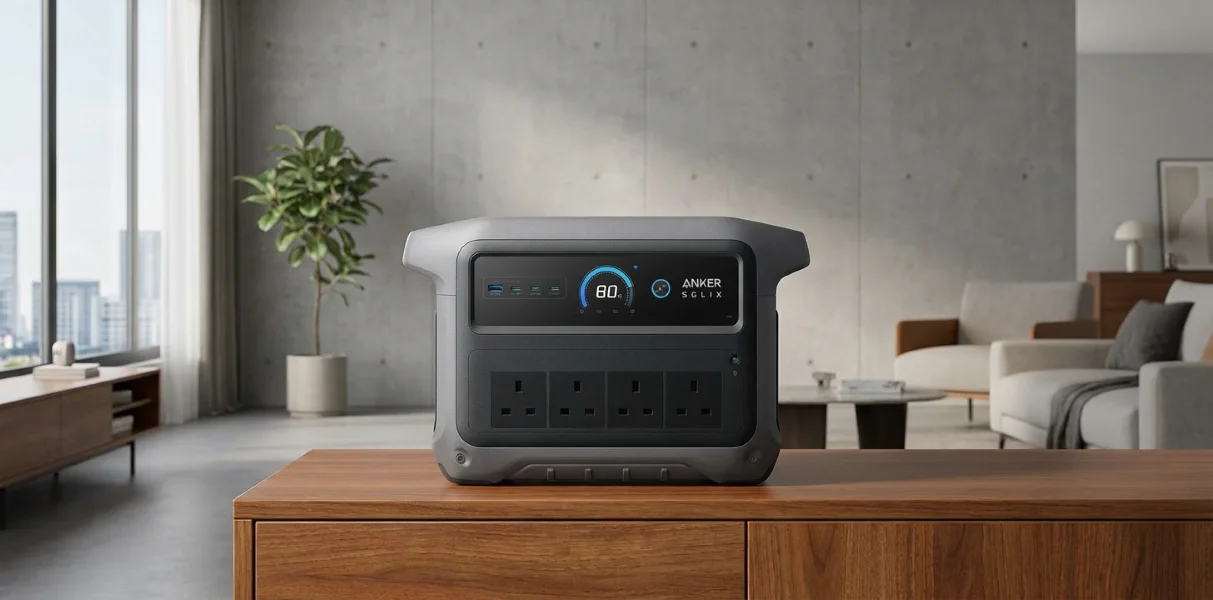
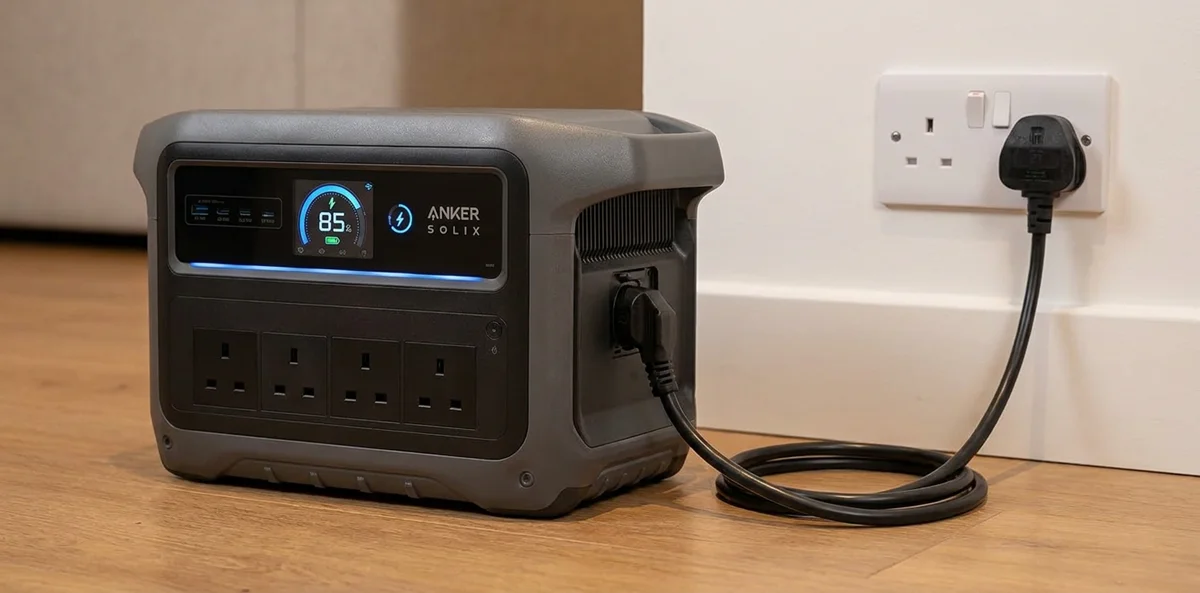
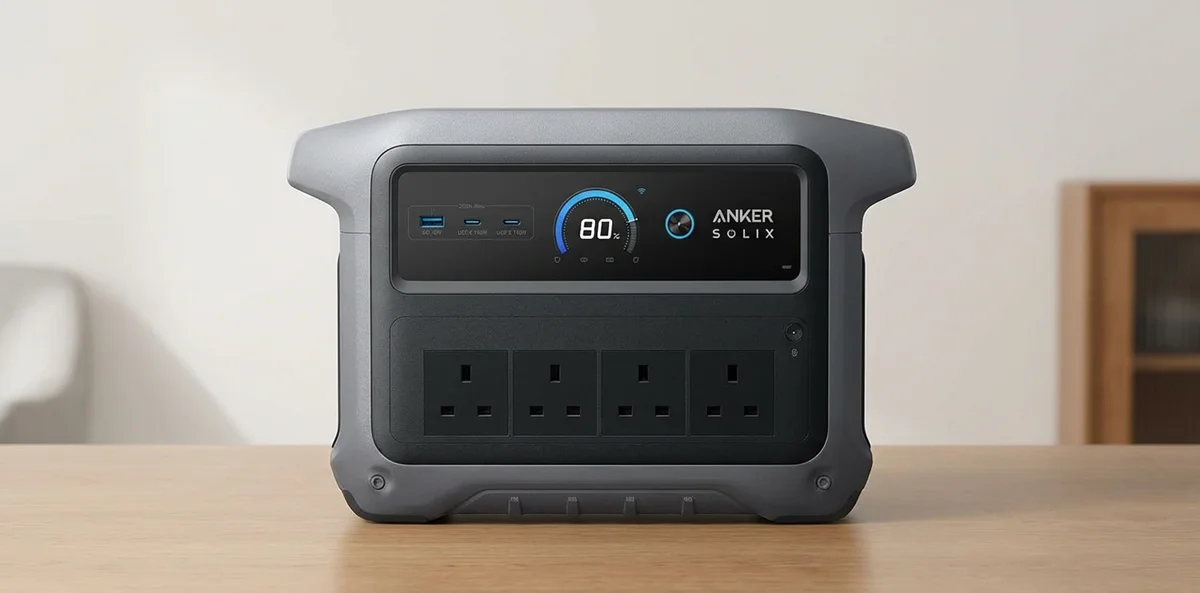
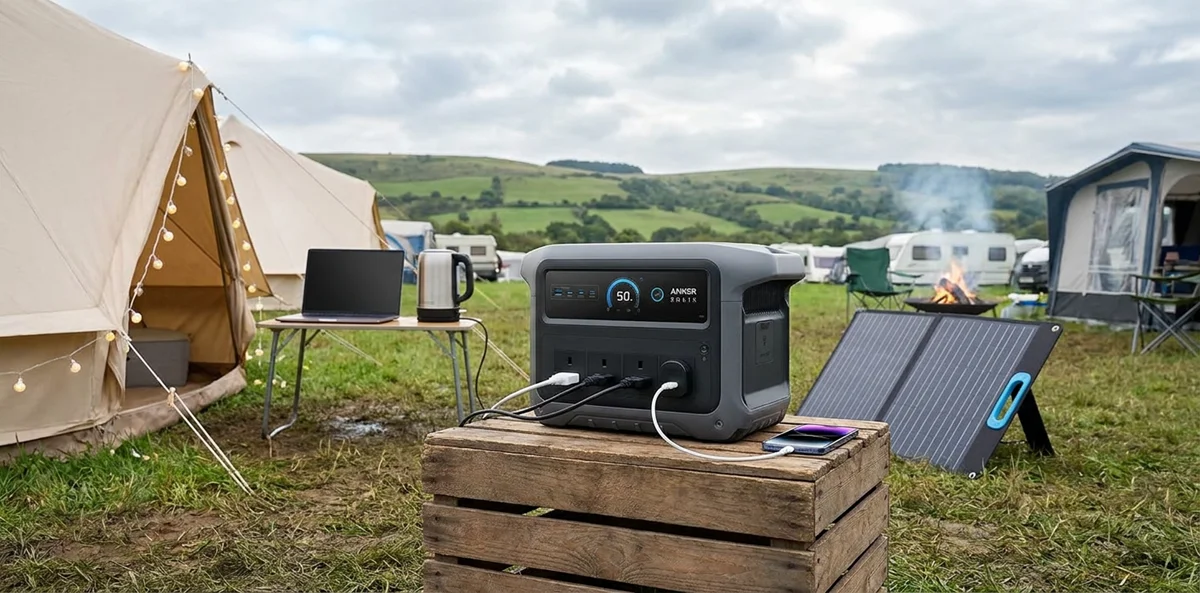
What Is the Anker SOLIX C1000 Gen 2?
The Anker SOLIX C1000 Gen 2 is Anker’s updated 1kWh portable power station for UK buyers. It holds 1,024Wh of LiFePO4 (LFP) capacity and pushes out 2,000W of continuous AC power, with a 3,000W surge for start-up loads. The headline upgrade is charge speed: it refills from a standard UK mains socket in about 49 minutes.
It is built for three jobs: camping and caravan power, home backup during a power cut, and running tools or appliances away from the grid. At 11.3kg and roughly 38 x 20 x 24.4cm, it is compact enough to carry solo and tuck into a boot or motorhome locker. Anker dropped the expansion port and the built-in light from the Gen 1 model to keep this version lighter and more portable.
Not sure how much capacity you actually need? Our power station size guide walks you through matching a unit to your real-world load before you commit.
Key Specifications at a Glance
| Specification | Detail |
|---|---|
| Battery Capacity | 1,024Wh (LiFePO4 / LFP) |
| AC Output | 2,000W continuous, pure sine wave |
| Surge / Peak Power | 3,000W |
| Max AC Charging Input | 1,600W (UltraFast, app-enabled) |
| Full Charge Time | ~49 minutes from flat (mains) |
| Solar Input | 600W max (single input, 11-60V, XT60i) |
| Car Charging | 120W (12V / 10A) |
| Weight | 11.3 kg |
| Output (UK voltage) | 220-240V / 230V, 50Hz |
| UPS / EPS Mode | Yes, under 10ms switchover |
| Ports (UK version) | 9 ports: multiple UK three-pin sockets (230V), USB-C up to 140W, USB-A 12W, 1 car socket 12V 120W |
| Battery Cycles | 4,000 cycles to 80% capacity (~10-year lifespan) |
| App Control | Yes: Anker app |
| Warranty | No (expansion removed on Gen 2) |
How Fast Does the Anker SOLIX C1000 Gen 2 Charge?
The Anker SOLIX C1000 Gen 2 charges from flat to full in about 49 minutes from a UK mains socket, using its UltraFast mode at up to 1,600W input enabled in the Anker app. That is the fastest mains recharge in the 1kWh class. Solar charging via the 600W input refills the unit in around 1.8 hours in ideal sun. In typical overcast UK conditions, allow longer.
Speed is the reason to buy this unit. Anker holds a Guinness World Record for the “Fastest recharging portable power station (1 kWh)”, verified at 43 minutes 48 seconds on 14 August 2025 under controlled conditions. In normal home use you should expect the roughly 49-minute figure, which an independent field test by The Solar Lab broadly confirmed at around 47 minutes.
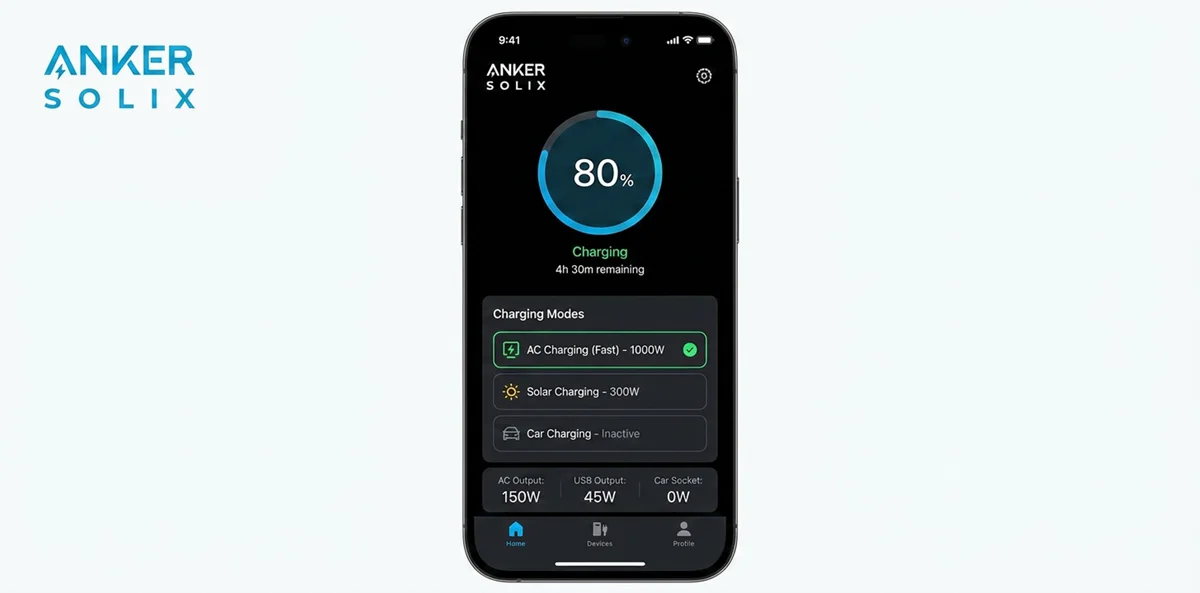
UltraFast charging is switched on through the Anker app, which lets you cap the input if you would rather charge gently to be kinder to the cells. Anker does not publish a separate 0 to 80% time for this model, so we have not quoted one. The full-charge figure is the number that matters here, and it is genuinely quick.
Does the Fast Charge Make the Fan Loud?
Yes, and it is worth flagging. The Solar Lab measured the unit running near-silent at light load, but the fan becomes audibly loud, around 45dB, when charging fast or under heavy draw. If you want a quiet overnight charge in a tent or bedroom, cap the input in the app rather than using full UltraFast mode.
How Much Solar Can It Take in the UK?
The C1000 Gen 2 accepts up to 600W of solar through a single input port, using one XT60i connector and an 11-60V range. This is a single solar input, not dual. In ideal sun, a full solar recharge takes around 1.8 hours. In typical UK conditions, with weaker winter light and cloud, plan for considerably longer and treat solar as a top-up rather than your only source.
The single solar input is the main limit for off-grid buyers. It is a sensible 600W ceiling for a 1kWh unit, but it is one MPPT input on one XT60i connector, so you cannot split panels across two strings the way you can on some rivals. If maximum solar harvest is your priority, the Bluetti Elite 100 V2 takes up to 1,000W and is the stronger solar choice.
For most UK campers, 600W is plenty. A pair of 200W panels in good summer sun will top the unit up over a day of camping, letting you run lights and a fridge into the evening. For a wider look at panel setups, see our guide to the best solar generators in the UK.
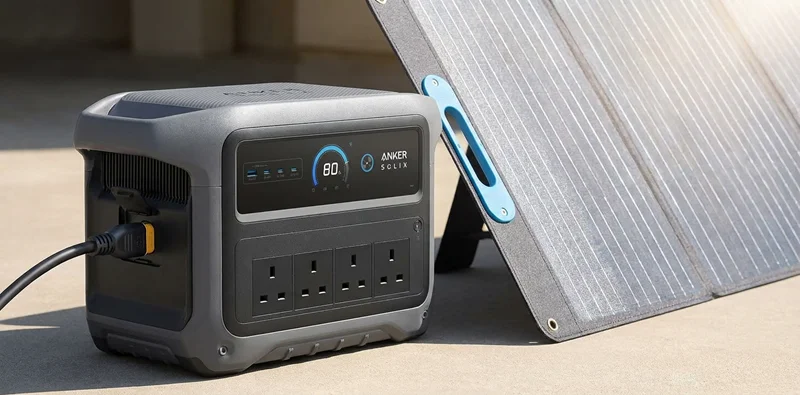
The 600W solar input recharges the C1000 Gen 2 in about 1.8 hours of strong sun, through a single XT60i port.
What Can the Anker SOLIX C1000 Gen 2 Actually Power?
With 2,000W of continuous output and a 3,000W surge, the C1000 Gen 2 runs most of what UK campers and home-backup buyers plug in: a mini-fridge, CPAP machine, laptop, TV, lights, and power tools. Real-world usable capacity is around 880Wh once you account for the roughly 86% inverter efficiency measured in independent testing.
Here are indicative runtimes based on that usable figure and typical device draw:
Other useful estimates: a CPAP machine without a humidifier runs for roughly 17 to 25 hours, and a 100W TV for around 8 to 9 hours. These reflect the unit’s roughly 86% inverter efficiency and idle draw of about 13.8W measured by The Solar Lab.
What Can It Not Run?
It cannot run high-wattage heating appliances. An electric kettle (2,500 to 3,000W), an electric shower (7,000W and up), and a standard oven all exceed the 2,000W continuous and 3,000W peak limits. If you need to boil a kettle off-grid, you will need a larger unit. Use our size guide to check your appliances before buying.
What Ports Does the Anker SOLIX C1000 Gen 2 Have?
The UK C1000 Gen 2 has 9 ports in total: multiple UK three-pin sockets (BS 1363, 230V), a USB-C port up to 140W, USB-A at 12W, and one 12V car socket rated at 120W. The 140W USB-C is one of the fastest on any 1kWh power station and charges most laptops at full speed. All AC sockets are standard UK three-pin, so no travel adapter is needed.
The 140W USB-C port is the standout. Most rivals in this class top out at 100W, so at 140W this one fast-charges the newest MacBook Pro models and can run a USB-C laptop alongside the AC sockets without a noticeable drop. Anker’s UK copy is inconsistent on the exact AC socket count, so we have not quoted a fixed number, but you get multiple UK three-pin sockets on the unit.
The Anker app connects to the unit for real-time input and output monitoring, charge-speed control, and UltraFast toggling. One thing to note for Gen 2: there is no built-in light. Anker dropped it from the Gen 1 model, so if you relied on that as a campsite torch, factor in a separate light.
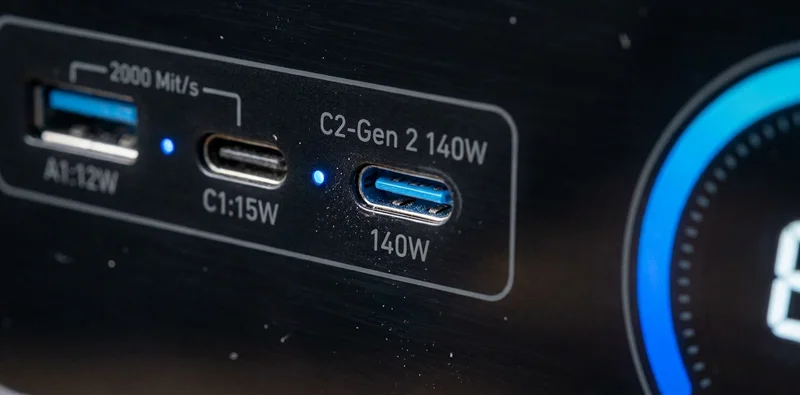
The 140W USB-C port is fast enough to charge a MacBook Pro at full speed.
How Quiet Is the Anker SOLIX C1000 Gen 2?
At light load the C1000 Gen 2 is near-silent, which makes it fine for overnight use in a tent or bedroom. Under fast or heavy charging, the fan becomes audibly loud at around 45dB, as measured by The Solar Lab. The fix is simple: cap the charging input in the Anker app to keep the fan calm when you need quiet.
This is the honest trade-off for the fast charging. Pushing 1,600W into the battery generates heat, and the fan has to work to clear it. For day-to-day running of a fridge or laptop, you will barely hear it. It is only the rapid charge and heavy loads that spin the fan up to that 45dB level.
If you plan to charge overnight near where people sleep, set a lower input in the app before bed. You lose some of the headline speed, but you keep the peace. For most users that is a fair swap to make a couple of nights a week.
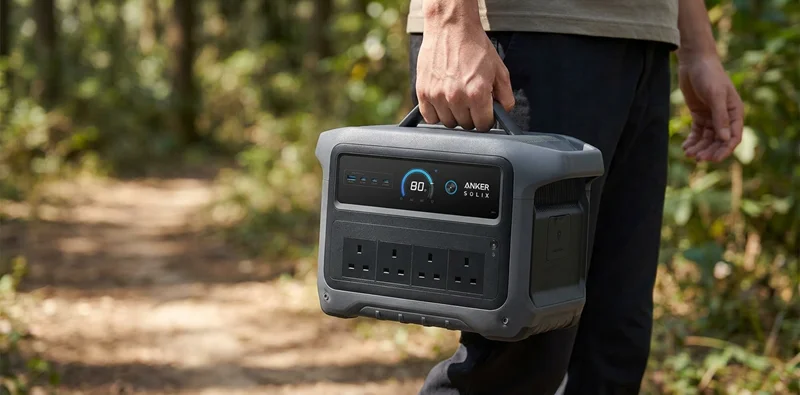
At 11.3kg and 38cm wide, the C1000 Gen 2 is light enough for one-handed carrying to the car.
Anker C1000 Gen 2 vs EcoFlow Delta 2 vs Jackery 1000 v2 vs Bluetti Elite 100 V2
Here is how the C1000 Gen 2 stacks up against the other main 1kWh options in the UK:
The Anker’s clear wins are output power at 2,000W and full-charge speed at around 49 minutes, both the best in this group. The Bluetti Elite 100 V2 leads on solar at 1,000W. The Jackery is the lightest and the only one with dual solar ports. For buyers who value the fastest mains turnaround and the highest output, the C1000 Gen 2 is the standout. For a wider view, compare the field in our EcoFlow vs Jackery comparison.
Who This Is NOT For
-
Anyone who needs expandable capacity: the Gen 2 cannot be expanded, so if you might need more power later, look at the EcoFlow Delta 2, which takes an extra battery.
- Buyers chasing maximum solar harvest: with a single 600W input, it is beaten by the Bluetti Elite 100 V2’s 1,000W and the Jackery’s dual solar ports.
- Anyone who wants a built-in light: Anker dropped it on the Gen 2, so you will need a separate campsite torch or lantern.
- People who need to boil a kettle, run an electric shower, or use an oven off-grid: all exceed the 2,000W continuous and 3,000W peak limits.
- Anyone who needs near-silent fast charging: the fan reaches around 45dB under UltraFast charging, so you will want to cap the input in the app for quiet.
Pros and Cons
- ~49-minute flat-to-full mains charge, the fastest in the 1kWh class
- 2,000W continuous output, the highest in this comparison group
- 3,000W surge handles tool and appliance start-up loads
- Compact at 11.3kg, an easy solo carry
- 140W USB-C charges newest MacBook Pro at full speed
- 4,000-cycle LFP battery, around a 10-year lifespan
- Under 10ms UPS switchover for home backup
- Anker app for charge control and monitoring
- 5-year UK warranty
- Not expandable: fixed 1,024Wh capacity
- Single solar input only, not dual
- No built-in light (dropped from Gen 1)
- Fan audibly loud (~45dB) under fast or heavy charging
- Will not run a kettle, electric shower, or oven
- Lower solar ceiling than the Bluetti Elite 100 V2
Alternatives Worth Considering
The C1000 Gen 2 is the strongest choice for fast mains charging and high output, but it is not right for everyone. Here are the main alternatives:
- Bluetti Elite 100 V2: Takes up to 1,000W of solar, far more than the Anker's 600W. The better pick if solar harvest is your priority. Same 11.3kg weight and a 4,000+ cycle battery.
- EcoFlow Delta 2: Expandable with an extra battery and packed with ports. Slower to charge at around 80 minutes and heavier at 12.2kg, but the better starting point if you want to grow capacity.
- Jackery Explorer 1000 v2: The lightest in class at 10kg and the only one here with dual solar ports. Lower 1,500W output, so best for campers who prioritise weight and solar flexibility over raw power.
For the full picture across the UK market, including the wider Anker range, see our guide to the best portable power stations in the UK.
Final Verdict
The Anker SOLIX C1000 Gen 2 is the fastest-charging 1kWh power station in this group, recharging flat to full from the mains in about 49 minutes. Add 2,000W of continuous output, the highest here, and it runs tools and appliances that catch out lower-rated rivals. It is compact at 11.3kg, backed by a 4,000-cycle LFP battery and a 5-year UK warranty, with a fast under-10ms UPS switchover. The 140W USB-C port is a nice touch for laptop users. The honest limitations: it is not expandable, there is no built-in light, and the fan gets loud during fast charging. If you want the most solar input on offer, the Bluetti Elite 100 V2 takes up to 1,000W. But if you want a unit that gives you the fastest mains turnaround and the highest output in the 1kWh class, this is the one to buy.
Frequently Asked Questions
For most UK buyers, yes. The C1000 Gen 2 is the fastest-charging 1kWh power station you can buy, refilling from a mains socket in about 49 minutes. It pairs that with 2,000W of continuous output, an 11.3kg compact body, a 4,000-cycle LFP battery, and a 5-year UK warranty. The trade-offs are that it is not expandable, has a single 600W solar input, no built-in light, and a fan that gets loud under fast charging. If you want speed and high output, it is a strong pick. If you want maximum solar or expandable capacity, look at the Bluetti Elite 100 V2 or EcoFlow Delta 2.
It charges from flat to full in about 49 minutes from a UK mains socket, using UltraFast mode at up to 1,600W input enabled in the Anker app. That is the fastest mains recharge in the 1kWh class. Anker also holds a Guinness World Record for the fastest recharging 1kWh power station, verified at 43 minutes 48 seconds under controlled conditions. Solar charging via the 600W input refills the unit in around 1.8 hours in ideal sun, and longer in typical overcast UK weather.
No. A standard UK electric kettle draws 2,500 to 3,000W, which exceeds the C1000 Gen 2’s 2,000W continuous output and 3,000W peak limit. The same applies to an electric shower (7,000W and up) and a standard oven. The unit handles lower-wattage appliances well, such as a mini-fridge, CPAP machine, laptop, TV, and most power tools, but it is not built for high-wattage heating appliances. Check your device wattage against the 2,000W ceiling before relying on it.
No, it does not have dual solar input. The C1000 Gen 2 has a single solar input port using one XT60i connector, accepting up to 600W at 11 to 60V. In ideal sun, a full solar recharge takes around 1.8 hours, though UK conditions will usually mean longer. If you need more solar capacity or the ability to split panels across two inputs, the Bluetti Elite 100 V2 (1,000W) and the Jackery Explorer 1000 v2 (dual solar ports) are better suited to a solar-first setup.
No. Anker removed the expansion port on the Gen 2 to keep the unit lighter and more portable, so its 1,024Wh capacity is fixed. If you think you might need more capacity in future, an expandable unit like the EcoFlow Delta 2, which takes an extra battery, is a better starting point. For buyers who only need a fixed 1kWh of capacity with the fastest possible recharge, the lack of expansion will not be an issue.
For solar, the Bluetti Elite 100 V2 is the better choice. It accepts up to 1,000W of solar input, compared to the Anker’s single 600W input. That extra headroom means faster off-grid recharging and more flexibility with panel setups. The Anker C1000 Gen 2 wins on mains charge speed (about 49 minutes versus around 70) and output power (2,000W versus 1,800W). Both have 4,000-cycle LFP batteries and 5-year UK warranties, and neither is expandable. Choose the Bluetti for solar-first use, and the Anker for the fastest mains turnaround and highest output.